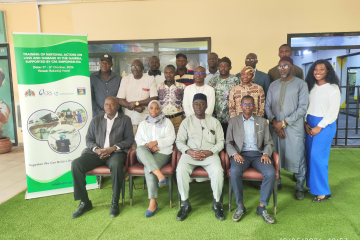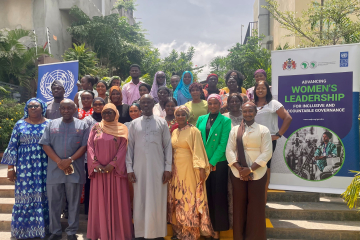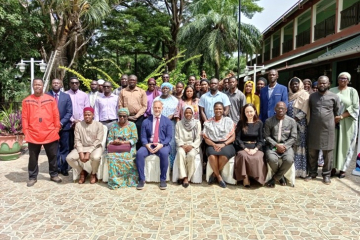
Delegates from 11 countries reflected on the friendships built, knowledge gained and partnerships forged during the intensive programme, which combined classroom lectures, field visits and cultural exchanges in Beijing and Changsha, Hunan Province.
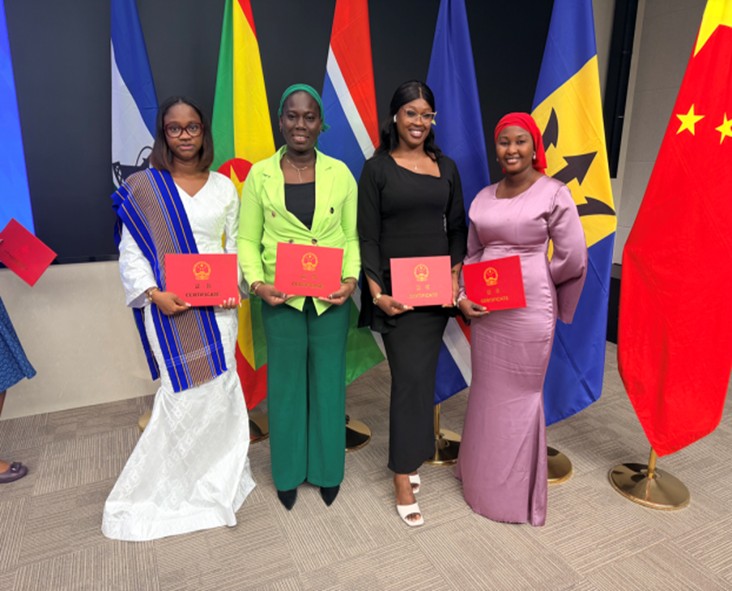
Among the participants were four Gambian women representing key national institutions: Isatou Ceesay, News Editor of The Point newspaper; Sally Jarju of GRTS; Aisha Fofana of Observer 24; and Justina Gladys Balucan of the Public Utilities Regulatory Authority (PURA). All four received certificates recognising their successful participation.
Zhai Xuemei, Vice Dean of the School of Continuing Education at China Women’s University, congratulated participants, describing the seminar as more than a training course.
“The seminar was not one‑way lecturing but dialogue; not simply training but shared growth,” she said.
She noted that participants showed enthusiasm during lectures, took careful notes during study visits and actively exchanged ideas, strengthening their understanding of China’s development experience and building bonds among women leaders from different regions.
Over the course of the seminar, participants explored China’s rapidly evolving media sector, including the integration of artificial intelligence into journalism, digital content production, broadcasting and international communication. They visited leading television stations, media organisations and innovation centres in Beijing and Changsha, observing how emerging technologies are reshaping news production and audience engagement.
Topics covered included media leadership, digital empowerment for women, entrepreneurship, integrity in journalism, women and children’s rights, and Belt and Road cooperation.
Delivering remarks on behalf of the international participants, Isteja Sansrine Butera, Deputy Director General of the Rwanda Broadcasting Agency, described the seminar as a life‑changing experience.
“We came, we saw and we learned,” she said, noting China’s progress in artificial intelligence, digital innovation, infrastructure and online media platforms.
Butera stressed that the knowledge acquired would be applied in participants’ home countries, adding that development must not come at the expense of cultural identity.
“Our culture is our anchor. It is where we draw our strength, our direction and our stability,” she remarked.
She said the greatest achievement of the seminar was the friendships created among women from different continents.
“No book, documentary or television programme could have given us what these two weeks have given us. We leave with knowledge, renewed purpose and friendships that will last a lifetime.”
Xing Huili, Deputy Secretary of the Party Committee of China Women’s University, congratulated participants and praised the organisers. She said the seminar provided comprehensive insight into China’s new media development through lectures, exchanges and field visits.
She highlighted the significance of the programme following President Xi Jinping’s announcement of initiatives to strengthen global women’s capacity building, including inviting thousands of women worldwide to China for training and exchanges.
As the seminar drew to a close, delegates exchanged farewells, photographs and promises to remain connected. The programme not only expanded professional knowledge but also fostered lasting international solidarity among women leaders committed to shaping the future of media in the digital age.