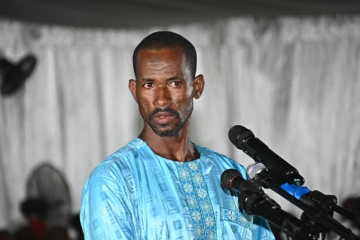
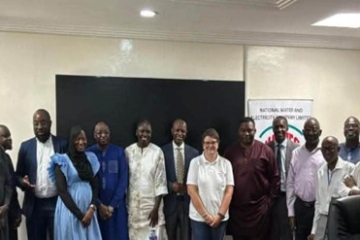
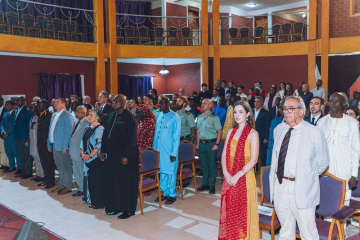
The discussion focused on examining whether political party frameworks are truly inclusive and whether they provide safeguards against Violence Against Women in Politics (VAWP). The review was conducted through a Women’s Civil Society Organisation lens with the active involvement of the Inter-Party Committee.
Participants included women politicians, aspiring female candidates, political party leaders, journalists, civil society actors, local government representatives and the Vice Chair of the National Assembly Select Committee on Gender, Children and Social Welfare.
The engagement was informed by a WFD-commissioned report supported by the British High Commission in The Gambia. The report examines internal party safeguards on inclusion and violence against women in politics within the context of the upcoming 2026 presidential election, followed by parliamentary elections in 2027 and local government elections in 2028.
Findings show that while political parties often express commitment to gender inclusion, concrete measures remain limited. None of the five political parties reviewed has a specific policy addressing Violence Against Women in Politics. Some parties have general codes of conduct, but these do not explicitly cover sexual harassment, online abuse or targeted political violence against women.
Although all five parties maintain women’s wings responsible for mobilisation and outreach, their representation in executive decision-making structures remains minimal. Only the United Democratic Party has provided a 25 percent quota for women within its executive.
The report also highlights that women are rarely nominated for safe or winnable seats during elections. Instead, they are often fielded in highly competitive constituencies without adequate preparation or support, despite their active involvement in party activities.
A major concern raised during the engagement was the rise of online harassment and smear campaigns targeting women politicians. Fear of defamation, digital abuse and reputational attacks continues to discourage many women from entering politics. The absence of clear internal party sanctions and limited intervention from relevant institutions have left many women to confront such challenges alone.
The discussion also referenced the Women’s Act, which prohibits all forms of violence against women and mandates public and private institutions to protect women’s rights. However, participants noted that implementation remains weak, particularly within political party structures. Provisions allowing temporary special measures to accelerate equality have yet to be effectively applied more than fifteen years after the Act’s adoption.
With party congresses approaching, stakeholders emphasised the need for political parties to move beyond rhetoric and introduce concrete reforms that ensure safer and more inclusive political spaces for women and young people.
As The Gambia heads into a new electoral cycle, the extent to which political parties adopt these reforms may determine whether women’s political participation expands or continues to face structural barriers.