Vice President Mohammed B.S. Jallow has called for increased investment in education, skills development, entrepreneurship and decent employment, saying The Gambia must create an enabling environment for young people to achieve financial independence and realise their aspirations.
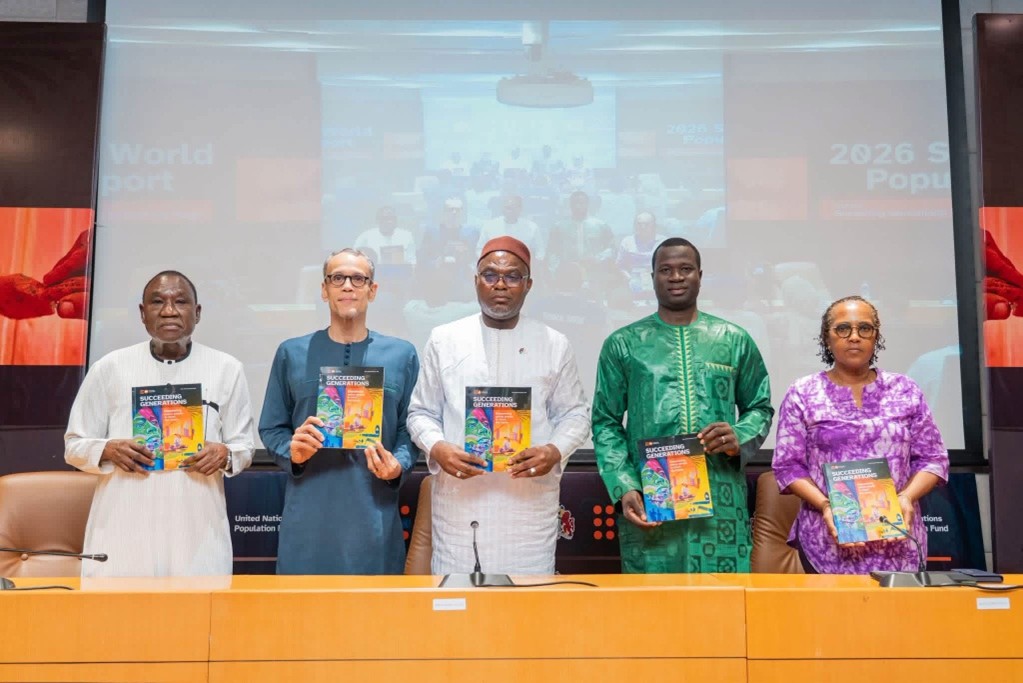
He made the remarks on Friday during the national launch of the 2026 State of World Population (SWOP) Report at the OIC Conference Centre in Bijilo, organised by the United Nations Population Fund (UNFPA) under the theme, “Succeeding Generations: Young People Charting Their Futures.”
The Vice President said findings from the report showed that financial security and stable employment were among the most important considerations influencing young people’s decisions about parenthood and their futures.
According to the findings presented, 80 percent of young people surveyed identified financial security as important, while 37 percent highlighted stable employment.
He said the findings carried an important message for The Gambia, noting that young people’s decisions were shaped not only by personal ambitions but also by the opportunities available to them.
“Our responsibility as leaders is, therefore, to create an enabling environment where young people can secure decent employment, access finance for entrepreneurship, achieve financial independence and pursue their aspirations with confidence,” he said.
Mr Jallow described the country’s youthful population as one of its greatest national assets, stressing that The Gambia’s future prosperity, stability and resilience would depend significantly on how effectively the potential of young people was harnessed.
He cautioned that a youthful population does not automatically translate into a demographic dividend, saying this requires deliberate investment in quality education, healthcare, skills development, decent employment, innovation and good governance.
He also highlighted the importance of preparing young Gambians for changes in the global economy, particularly digital transformation, artificial intelligence and emerging technologies.
UNFPA Country Representative Mamadou Dicko said the report’s findings resonated strongly with The Gambia, where many young people continue to face challenges transitioning from education to decent employment, accessing affordable finance and establishing sustainable businesses.
He noted that young women face additional barriers, including unequal opportunities, unpaid care responsibilities, gender-based violence and harmful practices such as female genital mutilation and child marriage.
Mr Dicko said the 2026 report drew on research involving more than 108,000 young adults across 73 countries and territories. Although the findings were not nationally representative, he said they demonstrated how economic security, supportive institutions and confidence in the future influenced young people’s decisions.
UN Resident Coordinator Karl Fredrick Paul reaffirmed the United Nations’ commitment to supporting young people’s aspirations through partnerships with the government, particularly in promoting inclusive livelihoods, human development and sustainable economic opportunities.
Minister of Youth and Sports Bakary Y. Badjie said young people were not asking for handouts or symbolic participation but wanted meaningful opportunities to influence decisions affecting their future.
He said government was intensifying investment in technical and vocational education, digital literacy, green economic initiatives and youth entrepreneurship.
The launch also featured two intergenerational dialogues bringing young people and policymakers together, alongside the presentation of a youth communiqué outlining priority actions for advancing their aspirations.
Discussions focused on economic security, livelihoods, the transition to adulthood, gender equality, reproductive rights, shared care and access to sexual and reproductive health services.