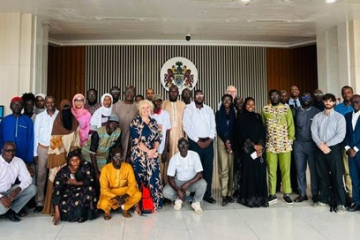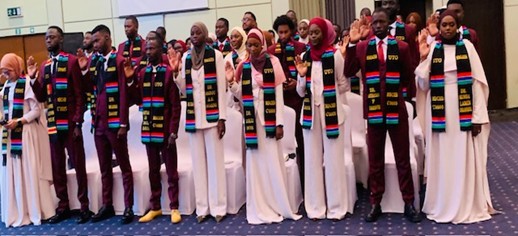
The 19th cohort completed rigorous academic and clinical training, earning their entry into the medical profession after years of study and practical exposure.
Vice Chancellor of UTG, Prof Herbert B. Robinson, described the occasion as a defining moment for both the graduates and the nation’s healthcare system.
“This ceremony represents a glorious occasion for our graduates, who today swear their professional oath and are formally inducted into the noble medical profession,” he said, adding that they are fully prepared for medical practice.
Minister for Higher Education, Research and Technology, Prof Pierre Gomez, said the induction marks the beginning of a lifelong responsibility of service.
“As you take your oath today, you do more than enter a profession; you assume a sacred responsibility,” he said, urging the new doctors to serve with compassion, integrity, and dedication.
He also highlighted government investment in medical education, referencing the ongoing Faraba Banta Campus project valued at about USD37 million, aimed at strengthening training infrastructure and producing globally competitive health professionals.
“We must move from being consumers of medical knowledge to becoming producers of it,” he said, encouraging innovation and local research.
Chairman of the UTG Governing Council, Mustapha Fanneh, said the induction reflects growing national investment in human capital development.
“We are not only training doctors; we are building a generation of professionals equipped to respond to the evolving health needs of our population,” he said.