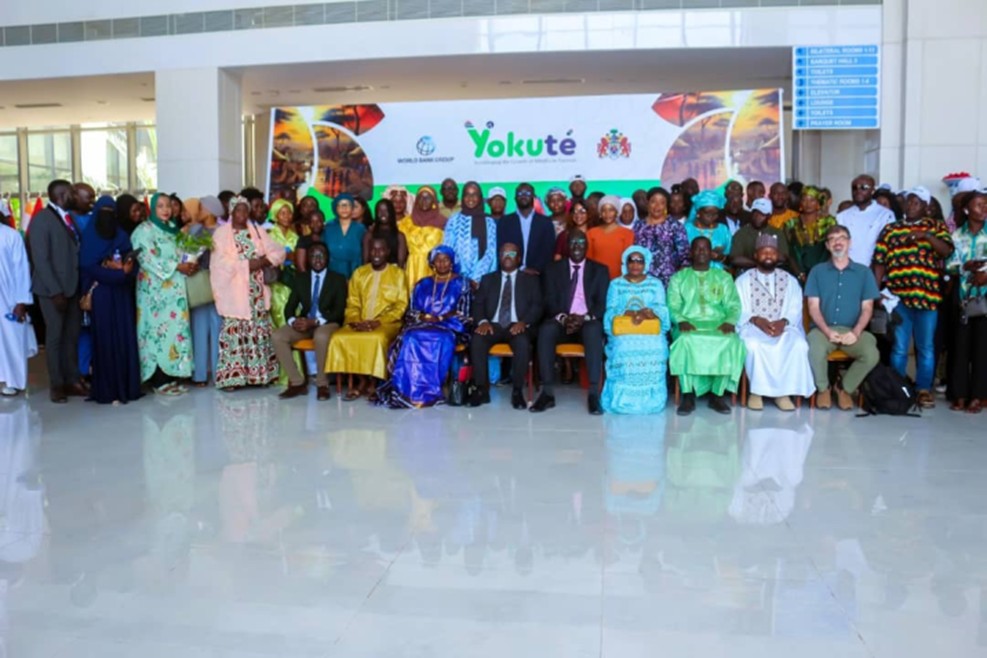
The programme, which also seeks to enhance tourism sector productivity, resilience, and inclusive growth by supporting MSMEs through a structured six-month program and potential funding opportunities, is set to graduate its second cohort on Monday 16th February 2026.
Funded by the World Bank Group, the sub-component of the TDRGP aims to enhance the capacity of tourism-related MSMEs, prioritising female-owned and female-led businesses to ensure their inclusion in the tourism value chain by fostering connections with Lead Firms (large firms in the tourism sector).
Earlier on, the first cohort of the project, drawn from over 200 applicants, completed six months of training in business formalisation and planning, financial management, digital marketing, service standards and sustainability practices. The second cohort numbering 61 trainees and drawn from diverse areas in tourism related entities have now completed their six-month training.
Ahead of the planned graduation of its second cohort, officials behind the programme on Monday 12th February 2026, told The Point the aims and goal of this project, which seeks to support and build capacity of MSMEs, while forging vital market linkages with leading hotels and tour operators.
David Jeng, Business Development Manager for the Yokute Accelerator Programme, spoke highly of the transformative nature of the project especially the MSMEs community, highlighting that their role is to support businesses in the project, build their capacity and ensure that they are investment ready for the market.
He revealed that they also assist them to access the matching grant to enable them grow the tourism sector in The Gambia.
“We have at the moment supported 116 SMEs in both the first cohort and the second cohort. In the first cohort, we have 55 SMEs across the country, and in this second cohort as well, we have 61 SMEs.”
These SMEs, he added, both first and second have their capacity built in different areas, ranging from legal and regulatory framework, compliance, financial management, access to market, food safety, quality, marketing, and many other areas that are related to business.
The purpose of this capacity building initiatives, he added, is that they have realised that these are some of the challenges that businesses face, and the goal is not only to build their capacity, but to also guide them and support them to be able to implement certain key strategies within their businesses and get them investment ready to be able to access the merchant grant.
“And so far over 90% of these MSMEs have access to the matching grant. In addition to that, other notable achievements of the project include the linkages that have been created. As you all know, one of the key components and milestones of the project is to ensure that SMEs have been supported to establish linkages with lead firms.”
He cited that 54% of these SMEs have secured new contracts with the lead firms, which he added, has shown that there has been a level of service delivery from the businesses to the lead firms.
Further, Jeng also disclosed that after the graduation of the second cohort, they will also unveil their third cohorts.
In the first cohort, he revealed that a sum of over $2 million was disposed, further describing SMEs as the engine of growth in any developing economy, with tourism contributing about 16% of GDP with over 200,000 jobs created.
‘‘So you would realize that Gambia's goal is to ensure that we're an all-year-round tourist destination, and SMEs play a key role in that, because these are the people who provide the inputs, but not only the inputs, but the services that are needed in the tourism sector.’’ he added.
Hamid Gbawuru Marah, team leader for the Yokute Accelerator Programme, described the journey as quite an interesting one and that it has been a learning adventure for them.
This, he added, is in view of the fact that all those involved have learned a lot and are now implementing the success stories.
“In the beginning of this programme, we did several diagnostics. We did a survey, built on a survey done by the World Bank and on the ecosystem and decided what would be the most appropriate way to build the capacity of the profiles of MSMEs you find in the Gambia.”
He made reference to series of initiatives undertaken at the start, citing in-person and farm-level direct coaching approach and engaging business development managers who are Gambians, experienced in business management, but also have a good understanding of the context.
Marah described the programme as quite fruitful, saying the testimonials from MSMEs is that beyond the grants, they have been able to transform their businesses in ways that they never imagined possible.