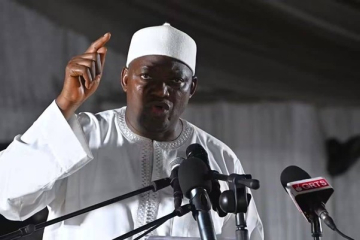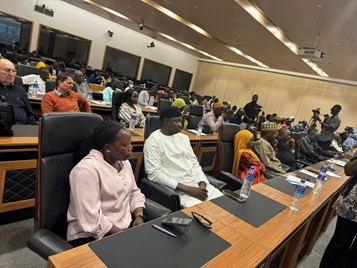
Colley stated that only political parties duly registered with the IEC in accordance with the Elections Act are permitted to sponsor candidates, access state media, and enjoy protections accorded to political parties.
He emphasised that any group not officially registered could not lawfully present itself as a political party or carry out such activities.
He further clarified that while associations and movements may exist under other legal frameworks, such recognition does not grant them the status or privileges of political parties.
The IEC Chairman also raised concern about what he described as “undue interference” in the voter registration process by some political actors, warning that such actions could undermine the smooth conduct and integrity of the exercise.
He noted that the Commission, in collaboration with the Inter-Party Committee and law enforcement agencies, would continue to monitor the political environment and take necessary action where violations occur. This may include public notices, referrals to the Attorney General, and court action where required.
Providing an update on the registration process, Chief Electoral Officer Sambujang Njie reported that 41,565 applicants were registered during the first week of the exercise, with 22,863 females representing 55 per cent, and 18,702 males.
Njie also highlighted operational challenges encountered, including technical glitches affecting voter cards, faulty printer heads, and generator breakdowns due to heat. He noted that corrective measures had been implemented, including retrieval and replacement of affected voter cards and deployment of additional equipment.
Despite these challenges, Njie reaffirmed IEC’s commitment to conducting a transparent and inclusive voter registration process, calling on all stakeholders to cooperate and comply with electoral laws.