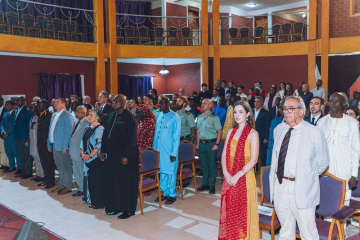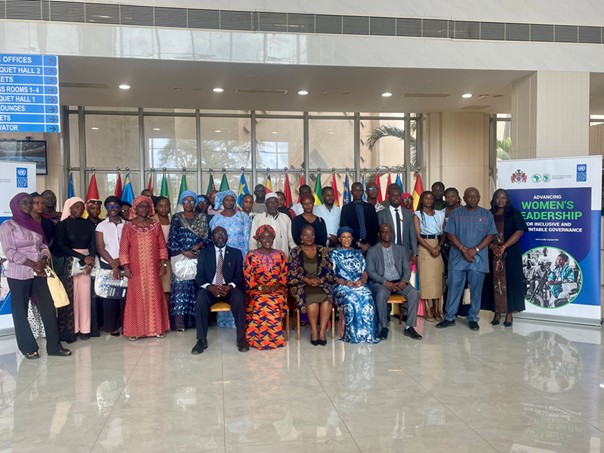
The two‑year nationwide initiative, unveiled at the Sir Dawda Kairaba Jawara International Conference Centre, forms part of a multi‑country programme also covering Guinea‑Bissau and South Sudan. It seeks to reinforce institutional capacity, improve legislative frameworks, promote gender‑responsive governance, and enhance civil society’s role in advancing transparency and accountability.
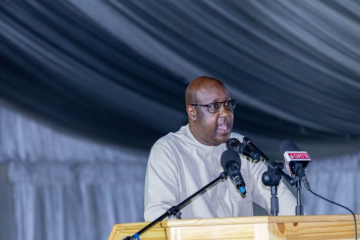
Speaking at the launch, UNDP Resident Representative Mandisa Mashologu described the project as a transformative intervention at a critical stage in The Gambia’s democratic transition. “The BRIDGE Project seeks to build a more inclusive, transparent and accountable governance landscape where institutions respond effectively to the needs of all citizens and where women are empowered to lead, influence decision‑making and contribute fully to the country’s democratic transformation,” she said.
Mashologu outlined four mutually reinforcing objectives: strengthening institutions and legislative reforms; empowering women through leadership and skills development; building civil society’s capacity to engage with public institutions; and fostering regional collaboration and peer learning on governance reforms.
She highlighted the persistent gender gap in Gambian politics, noting that although women make up 51 percent of the population and 57 percent of registered voters, they hold only 8.6 percent of National Assembly seats and 15 percent of councillor positions. The project, she explained, aims to improve women’s representation in governance ahead of future elections while strengthening institutional responses to sexual and gender‑based violence.
Representing the Minister for Gender, Children and Social Welfare, Mariyann G. Jabang Secka, Director of Gender Equality and Women Empowerment, hailed the launch as a milestone in consolidating democratic governance and resilient institutions. She congratulated UNDP and AfDB for supporting The Gambia’s development agenda, noting that the initiative aligns with the National Gender Policy (2025‑2034), the National Development Plan (2023‑2027), the Sustainable Development Goals, the African Union Agenda 2063, CEDAW and the Maputo Protocol.
“The BRIDGE Project is both timely and strategic. As The Gambia continues to consolidate its democratic gains, we must ensure that our governance systems are transparent, accountable, inclusive and responsive to the needs of all citizens, particularly women, girls and persons with disabilities who remain underrepresented in leadership and decision‑making,” she said.
She emphasised that achieving these objectives requires collective ownership and strong partnerships involving government institutions, Parliament, the judiciary, civil society, development partners, traditional and religious leaders, the private sector, women, youth and communities.
Providing an overview, BRIDGE Project Manager Thomas Kimaru explained that the programme was developed in response to weak public institutions inherited from the previous regime, low women’s participation in leadership, and persistent challenges in accountability. He said the project will work closely with government institutions, the judiciary, civil society organisations, the media, academia, research institutions, the private sector and development partners.
Kimaru outlined four key outcomes: improving institutional capacity and legislation for gender‑responsive, transparent governance; empowering women leaders through targeted skills development; strengthening civil society organisations to advocate for accountability; and promoting regional coordination and knowledge sharing on governance reforms.
The project will also support capacity building for the judiciary, strengthen responses to gender‑based violence cases, promote gender‑responsive budgeting, enhance legal aid services and improve public accountability through stronger civil society engagement.
Mashologu reaffirmed UNDP’s commitment to supporting implementation of The Gambia’s National Development Plan (YIRIWA), saying the programme directly contributes to governance, gender equality and rule of law priorities. “The integrated approach of the BRIDGE Project will strengthen institutions, empower women and enhance civic engagement, creating a cycle where inclusion reinforces accountability, builds public trust and contributes to peace and sustainable development,” she said.