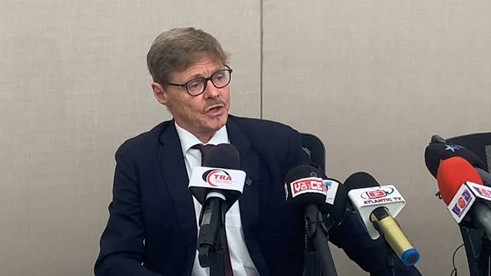
The United Nations Special Rapporteur on extrajudicial, summary or arbitrary executions, Morris Tidball-Binz, has urged The Gambia to abolish the death penalty once and for all, saying its retention in the Constitution remains inconsistent with international law despite major reforms.
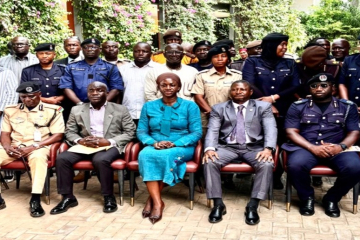
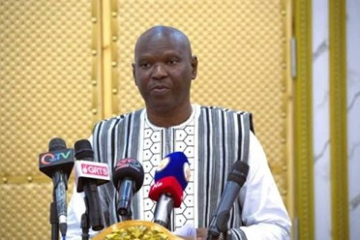
Tidball-Binz, a forensic doctor, was speaking at the end of his 12-day visit to The Gambia from 5 to 16 October 2026, to assess the right to life, accountability for past crimes, and protection of life.
"The Gambia abolished the death penalty in 1993. It became a beacon of respect and promotion of human rights applauded by the international community," he said.
"In 1994, after the coup, it was reinstated, albeit with promises that this would be reviewed. It didn't happen."
The Special Rapporteur recalled the 2012 executions of nine death row inmates. "In 2012, you had nine people dragged away at night by the junglers from Mile 2 prison, death row prisoners, who the president said would be executed without mercy. Actually, they were victims of forced disappearances. No one knows where they ended up. They were not executed by the prison services. Those were arbitrary killings, and the bodies are still not being recovered."
He welcomed that the present government has enacted reforms including the new Criminal Act of 2025 which does away with the death penalty, but noted it is still in the Constitution.
"I'm urging the Gambia to abolish the death penalty once and for all, because this is not an option; it's an obligation under international law," he said.
Tidball-Binz said The Gambia has made remarkable progress since 2017 but more needs to be done for victims' families.
He noted that out of 365 TRRC recommendations, the government accepted 363, and the National Human Rights Commission is monitoring implementation. He praised the recent appointment of the Special Prosecutor in September 2026 to prosecute high-profile cases under a hybrid court.
On prison conditions, he said inmates who have been there since before the regime change told him how dramatically conditions had changed.
"Previously walled beatings, and no longer is a case. Food and prison pool issues" have improved, he said, calling it a very positive change.
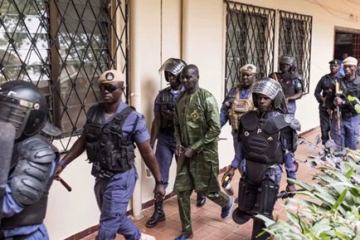
On excessive use of force, he cited documented cases including the killing of three students in Faraba Banta in 2018 during protests against sand mining, and the recent killing of Omar Badjie on 26 September 2025.
He said in the case of Badjie, police initially claimed he died while running away, while witnesses saw him being beaten and a coroner's report found trauma to the brain.
"The difference is that in these cases, investigations were opened, and acknowledgement was made by the highest authorities, even by the president in the case of the Faraba shooting, when he went to the village to apologize. Officers were suspended. Although full justice may still be awaiting to be completed, at least full impunity has ended, and this sends a strong message," he said.
As a forensic expert, Tidball-Binz said he visited burial sites and the country's only mortuary at the Edward Francis Small Teaching Hospital.
He said staff are doing "heroic work" and the mortuary is clean and well kept, but lacks basic equipment like gloves and tools.
Tidball-Binz concluded that The Gambia already stands as a model, but will only be a true beacon "if and when the quest of families of those killed and missing from the former regime is satisfied."