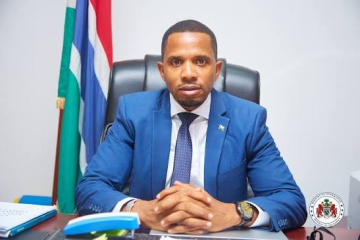
He contends that the action taken against him was unconstitutional and did not follow the laid down procedures protecting the office of the Auditor General.
The plaintiff is represented by Counsel J. Darboe, alongside Jarra Jeng and F. Bondi.
The State is represented by Solicitor General Thomasi, Counsel I. Drammeh and Counsel A.A. Wakawa.
Submitting his final brief, Counsel J. Darboe told the court that his client was removed from a constitutionally protected office “through the police officers under the directorate of the President by the Ministry of Justice and the Inspector General.” He argued that the office of the Auditor General is safeguarded under Sections 158, 159, 160 and 169 of the Constitution, as well as Section 164 of the National Audit Act.
Darboe submitted that the Constitution provides only two grounds for the removal of an Auditor General such as inability to perform functions due to mental or physical incapacity, or incompetence and that such removal must follow the establishment of a tribunal led by a High Court judge.
He maintained that Ceesay was neither mentally nor physically incapacitated, nor incompetent, and therefore could not lawfully be removed.
He further argued that the State, in its statement of defence, acknowledged that the former Auditor General was removed by police after refusing to vacate his office during the swearing-in of a new Auditor General. According to Darboe, this admission confirmed the unlawful nature of the removal.
Counsel I. Drammeh for the State argued that Ceesay was not forcefully removed, pointing to his own testimony that he was asked to leave and complied.
She maintained that once he accepted appointment as a minister, he ceased to be Auditor General, and therefore there was no forceful removal.
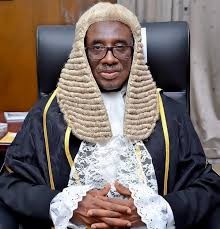
After hearing submissions from both sides, Chief Justice Hassan B. Jallow adjourned the matter for judgment.