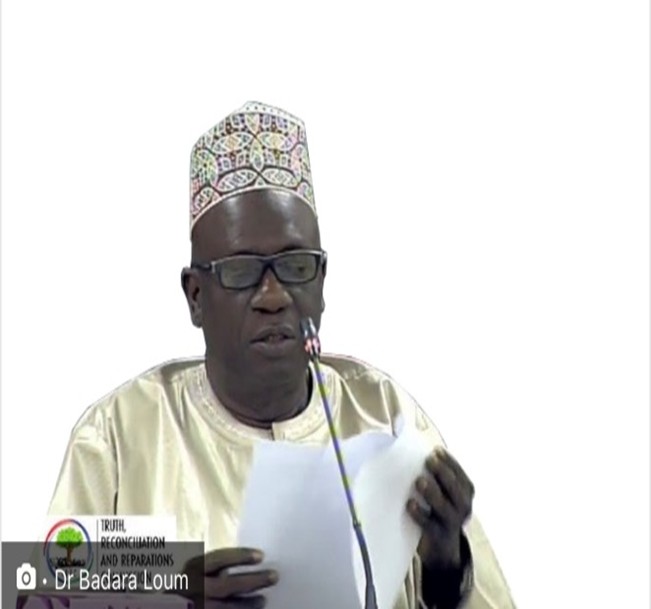
The TRRC interviewed about 2,000 victims but officially recognised 1,009, whose compensation now falls under the mandate of the Reparations Commission.
Out of that number, Dr Loum disclosed that 248 victims have been paid in full, mainly those whose allocations were D70,000 and below. The remaining 761 victims, including 54 West African migrants, are still awaiting the completion of their payments. According to the commission, about 707 of these victims have so far received an advance payment of roughly 19 per cent, with work ongoing to clear their balances.
Dr Loum explained that payments are being made in phases because the commission does not have enough resources to compensate everyone at once. To manage the process fairly, the commission adopted a chronological system based on the year victims were evaluated by the TRRC. Payments began with victims whose evaluations date back to 1994, then moved through 1995 and 1996, with plans to proceed gradually up to the year 2000.
He said this system has helped the commission to make progress, but it has also generated complaints from victims who feel they deserve more or believe they should have been paid earlier. In response, Dr Loum stressed that the commission is relying strictly on the TRRC database and records. Where disputes arise, victims are encouraged to present documentary evidence for verification.
“Another factor slowing down payments, according to the commission, is documentation. Many victims submitted documents to the TRRC years ago that no longer match their current identification or banking details. Even small differences in names have led to delays, as banks refuse to process payments when records do not align.”
He said the situation is even more complex for victims from other West African countries. While their allocations remain the same as approved by the TRRC, the commission faces challenges related to distance, limited documentation and identifying next of kin. Despite this, Dr Loum assured that the commission is committed to paying them through proper banking channels, just like Gambian victims.
On funding, Dr Loum revealed that the government allocated D20 million for victim compensation in 2025, which allowed payments to start. About 40 per cent of that amount has already been utilised, and the commission expects the funds to be exhausted by mid to late February. Another D20 million has been allocated for 2026, which the commission plans to tap into immediately to avoid interruptions.
However, he acknowledged that the overall financial gap remains wide. Liabilities from the TRRC alone stand at about D168 million, excluding compensation for West African migrants and newly emerging victims. With estimates suggesting hundreds of new claimants could still come forward, Dr Loum admitted that current allocations are far from sufficient.
Despite the slow pace, the commission insists the process is ongoing. “We have started, and we are continuing, adding that while the numbers already paid are modest, the goal is to ensure that every recognised victim eventually receives their reparation, step by step, within the limits of available resources.”