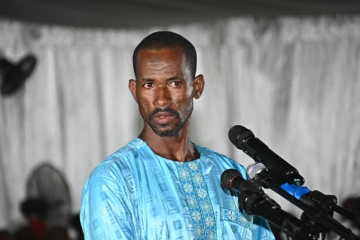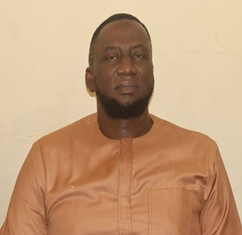
“While the Honourable Minister provides political direction, my role is to ensure that the systems, people, finances and structures are aligned to deliver results,” he stated.
He added that administration may not always be visible to the public, but it remains the engine behind every programme, youth initiative and sporting achievement in the country.
The Ministry, he explained, operates through specialised directorates and works closely with key statutory bodies such as the National Youth Council of The Gambia and the National Sports Council of The Gambia. The structure ensures a clear separation between policy direction, administrative oversight and programme implementation — a system he says strengthens accountability and improves service delivery nationwide.
He also emphasised coordination with regional structures to ensure that youth and sports development is not concentrated in urban areas alone.
On financial management, Mr Dibba said the Ministry has strengthened budget planning so that allocations are directly aligned with strategic priorities and measurable outcomes. Greater emphasis is now placed on internal controls, compliance and transparent reporting.
“Every Dalasi invested must produce tangible benefits for young people,” he said, pointing to skills development, entrepreneurship and sports performance as key areas of impact. The Ministry is building systems that track not only spending, but results.
Institutional capacity, he noted, is fundamental. Staff are receiving training in project management, procurement, monitoring and evaluation, and results-based management. He is also promoting a performance-oriented culture within the Ministry so that officers understand their direct contribution to national development. Strong institutions, he stressed, are built by competent and motivated people.
In terms of governance, the Ministry provides regulatory oversight to ensure affiliated youth and sports bodies operate within established standards.
According to Mr Dibba, transparency, accountability and democratic practices are essential to strengthening public trust and credibility both nationally and internationally. Sound governance, he added, ensures that youth organisations and sports federations operate in the best interest of the young people they serve.
Monitoring and data are also central to his administration. The Ministry is shifting from activity-based to impact-based reporting. “It is not enough to say we conducted a training,” he explained. “We must ask how many young people gained employment and how many athletes improved their performance.” Data-driven planning, he added, supports informed decisions, better resource allocation and continuous improvement.
On decentralisation, he stressed that youth development and sport must reach every region of the country. Coordination with Regional Governors and Area Councils is being strengthened to promote inclusive access to programmes and facilities. “No young Gambian should be disadvantaged because of where they live,” he stated.
Infrastructure management is another priority, PS Dibba says. Facilities such as the Independence Stadium require structured maintenance systems and sustainable financing models. Oversight mechanisms are being reinforced to protect national investments and ensure proper maintenance for future generations.
Looking ahead, Mr Dibba’s vision is for an efficient, transparent, digitally modernised and results-oriented Ministry. He believes administrative reform may not always be visible like a stadium or youth center, but it is the foundation upon which every developmental achievement stands. When systems are strong, he said, programmes become sustainable and when programmes are sustainable, young people thrive.