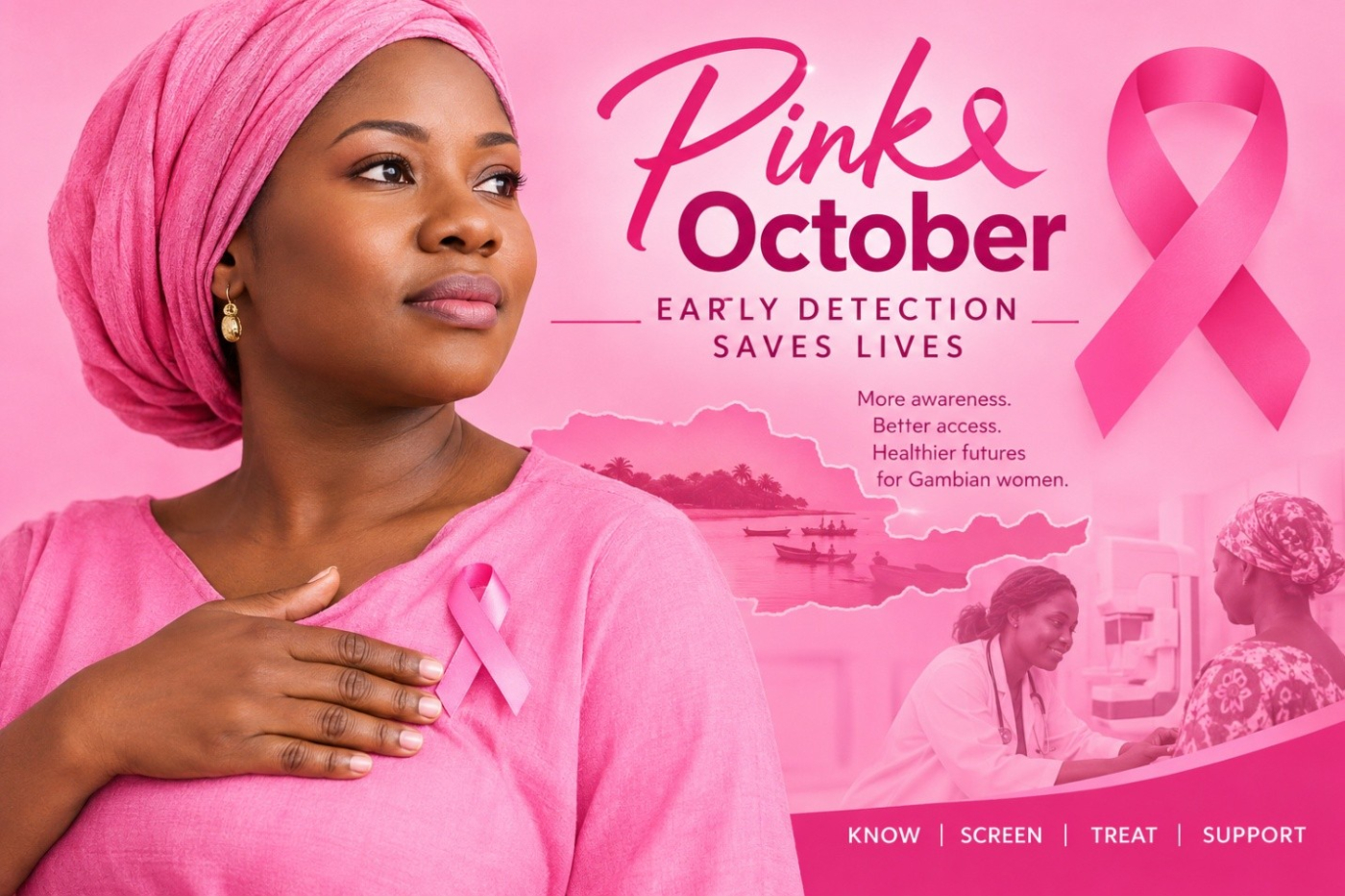
“Pink October should not end with awareness activities. We need year-round education, affordable screening and services that women can access regardless of where they live,” she said.
Her concerns are backed by a 2025 study published in PLOS ONE involving 985 women in rural Gambia, which found that although 87.7 percent had heard about breast cancer, only 12.6 percent had undergone screening.
The study cited limited knowledge of screening services, financial constraints and unavailability of services as barriers. Among unscreened women, 58.7 percent cited limited knowledge, 13.5 percent unavailability, and 13.1 percent financial constraints.
Corr said rural women face greater difficulties accessing information, recognising warning signs and knowing where to seek help. Misconceptions that cancer is contagious, caused by supernatural forces, or affects only older women discourage medical attention.
She urged communities to discuss cancer openly and recognise signs such as new lumps, changes in breast shape or size, skin dimpling, nipple changes and unusual discharge.
“Women should not ignore unusual changes because they are afraid of what people may say,” she said.
She also highlighted transportation costs and time away from work for rural women seeking care far from specialised facilities.
Corr called for collaboration among health authorities, providers, civil society and community groups to bring screening closer to underserved populations, and for family support to reduce stigma.
“Women facing cancer need more than medical care. They need understanding and encouragement. No woman should feel she has to face this journey alone,” she said.
She said Pink October’s success should be measured not by events, but by whether women can access screening, timely diagnosis and treatment.