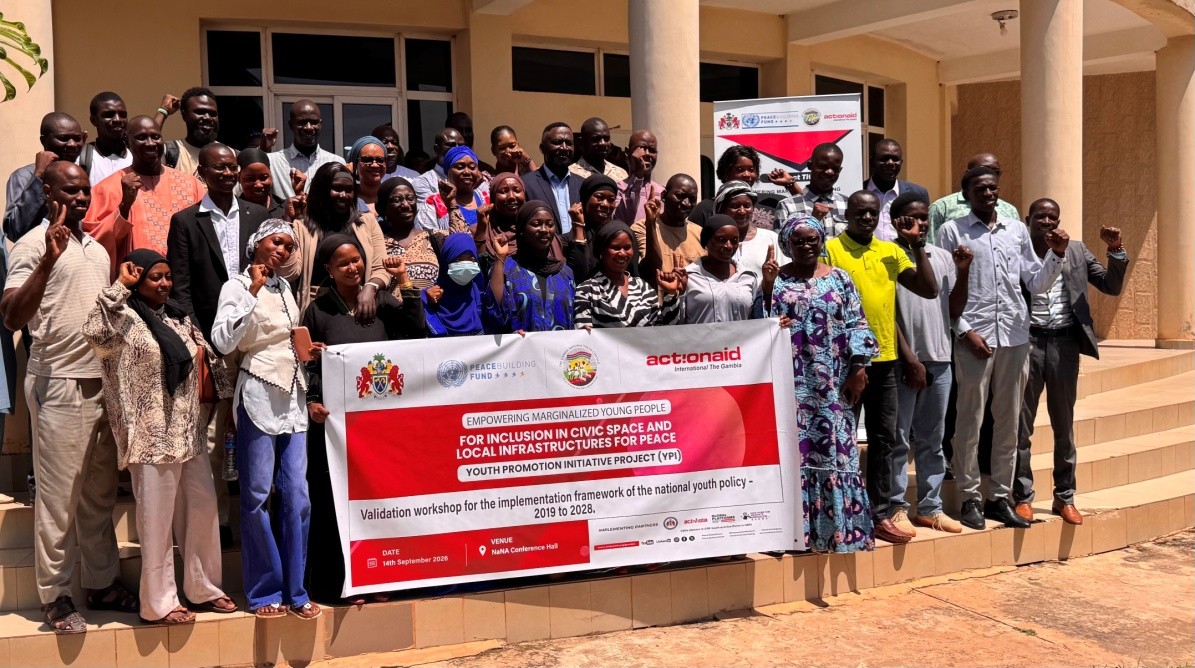
The validation exercise, held at the NaNA Conference Hall, brought together representatives from government ministries and institutions, youth organisations, civil society organisations, development partners, academia and the private sector.
The exercise seeks to present the draft Implementation Framework to key stakeholders and gather critical input, feedback and recommendations to ensure that the framework is inclusive, practical, actionable and aligned with the country’s national development priorities.
Speaking at the gathering, Ismaila Badjie, Programme Manager at the National Youth Council, described the validation as more than a formal exercise, saying it represents a shared commitment to empowering young people and strengthening their participation in shaping the country’s future.
“Today, we stand at a pivotal point in our journey towards establishing a robust framework that will guide our efforts to enhance the well-being, creativity and potential of our young people,” he said.
Mr Badjie emphasised that young people should not only be regarded as leaders of tomorrow, but as “change makers of today”, stressing the need to create an environment where they can thrive, find their voices and contribute meaningfully to the socioeconomic development of The Gambia.
He said the framework was developed through a collaborative process involving young people, community leaders, government representatives, youth organisations and other stakeholders.
He therefore urged participants to critically review the draft and provide constructive recommendations to ensure that the final document is comprehensive, relevant and capable of addressing the diverse realities facing young people across the country.
Meanwhile, Fafa O. Cham, Head of Programmes and Policy at ActionAid The Gambia, described the document as a crucial instrument because it would guide the implementation of the National Youth Policy.
He acknowledged the work that had gone into developing the framework but challenged stakeholders to scrutinise it thoroughly and identify areas requiring improvement.
“Your inputs and critical scrutiny of the document can make it much better,” she said, urging participants to ensure that the final framework becomes a practical guide for implementation rather than merely another policy document.
Mr Cham also used the occasion to appeal to Gambian youths to reject violence ahead of the December 5 presidential election.
For his part, the Permanent Secretary at the Ministry of Youth and Sports, Bulli Dibba, said young people represent the hope of the nation, stressing that The Gambia must invest in creating opportunities for them to grow and develop.
He said he believed The Gambia has some of the best young people in Africa, but argued that they need opportunities, mentorship, coaching and meaningful support to realise their potential.
PS Dibba, however, cautioned that the success of the National Youth Policy would ultimately depend not on the quality of the document but on its implementation.
“The success of a national policy is not ultimately determined by the quality of the document. The Gambia is very good at producing quality documents, but implementing the documents is a challenge,” he said.