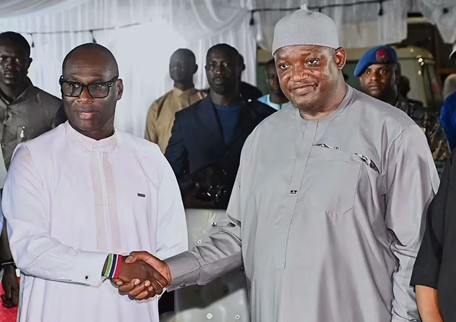
According to the document, the parties recognise that the 2026 election presents a choice not only about who governs The Gambia, but about whether the country can finally complete the reform process demanded by citizens.
Noting the expertise and professional capacity of the APP-Sobeyaa leadership, the MOU states that the NPP invited APP-Sobeyaa to become its partner in the NPP-led alliance, with the NPP providing the presidential platform while both parties commit to a reform agenda.
"The Parties hereby agree to work together to elect the NPP presidential candidate and establish a government committed to the Reform Agenda set out in this Understanding," the MOU states, adding that each party shall retain its political identity and organisational independence.
The partnership, according to Section 2, is founded on national interest above partisan interest, democracy, constitutionalism and the rule of law, accountable and corruption-free government, and measurable delivery.
The parties agreed to coordinate political and campaign efforts to present a unified front, with APP-Sobeyaa supporting the agreed presidential candidate.
Under Section 4, the MOU outlines nine priority reforms to be pursued between 2027-2031 if the NPP candidate wins.
These include: enactment of a new constitution reflecting the wishes of Gambians, including presidential term limits and stronger institutional checks; comprehensive electoral reforms including diaspora voting; operationalisation of the Anti-Corruption Commission with institutional independence; establishment of mechanisms for implementing outstanding TRRC recommendations; comprehensive security sector reform under democratic civilian oversight; progressive expansion of national health insurance; development of a national agriculture strategy to strengthen food security; measures to reduce cost of living; and a comprehensive civil service review.
On representation, the MOU states that following an NPP victory, APP-Sobeyaa representatives shall be allocated positions in government, "notwithstanding the expressed wish of the Secretary General of APP-Sobeyaa not to hold a direct position in government."
The minimum positions are set out in a Confidential Annex, with additional positions to be allocated in accordance with the personal undertaking of the President. Representation shall be based on competence, the document states.
The parties agreed to translate commitments into a National Reform and Delivery Programme with specific actions, responsible institutions, deadlines, and public accountability mechanisms.
"This understanding is not an electoral arrangement in which political parties merely exchange support for positions. It is a commitment to use a joint political mandate to complete reforms that have remained outstanding for too long," the MOU concludes.
The alliance adds to a growing number of partnerships being formed ahead of the December 2026 presidential election.