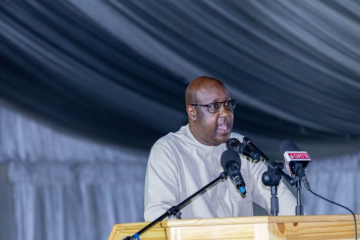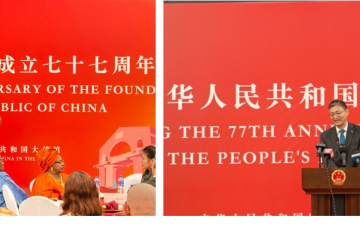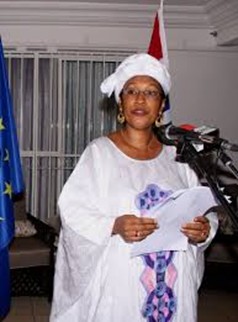
Delivering a keynote address at the Eminent Persons Roundtable Conference on China-Africa Relationship organised and hosted by the Chinese People's Institute of Foreign Affairs via Zoom on March 25, 2026, Mrs Gaye, who is also the current Chair of The Gambia's Information Commission, framed the Zero Tariff Measure not as a technical trade policy, but a "gateway to transformation" for African economies.
The event, held in commemoration of 70 years of China-Africa diplomatic relations and the Year of People-to-People Exchanges, brought together former foreign ministers and other distinguished participants from both Africa and China to engage in exchanges and discussions under the theme China's 15th Five-Year Plan and China Africa Cooperation in the modernisation drive of the Global South.
Madam MacDouall-Gaye praised China's longstanding partnership with Africa, noting that trade between both sides surpassed $300 billion in 2025, reinforcing China's position as the continent's largest trading partner for over a decade. Yet, she cautioned that the real opportunity lies not in volume, but in value.
"For Africa, this is not just about trade volumes. It is about transformation," she said, stressing the need to shift from raw exports to value-added production.
At the heart of her message was the Zero Tariff Measure, an initiative that removes tariffs on a wide range of African exports entering China.
According to MacDouall-Gaye, this policy opens unprecedented access to one of the world's largest consumer markets, but only if African countries are ready to compete.
She pointed to promising gains already being made, with African products such as sesame, cashew nuts, cocoa, coffee, fisheries, and textiles gaining visibility in China.
Bringing the message home, Gaye highlighted The Gambia's groundnut sector as a clear example of untapped potential. Groundnuts, a backbone of the country's agricultural economy, supports thousands of smallholder farmers. With better processing, packaging, and adherence to international standards, she said, Gambian products like peanut oil could significantly expand their footprints in China under zero-tariff conditions.
"This is not just about increasing exports," she emphasised. "It is about raising incomes for rural farmers, strengthening agro-processing industries, and creating jobs along the value chain."
Her speech struck a pragmatic tone, acknowledging that market access alone is not enough. She outlined three critical areas requiring urgent attention: boosting production capacity, improving standards and trade facilitation, and strengthening coordination to connect African producers efficiently to Chinese consumers. African governments can support this by investing in infrastructure, reducing bureaucratic barriers, and helping businesses meet all necessary compliance.
Madam Gaye also situated the initiative within the broader framework of the Forum on China-Africa Cooperation (FOCAC), the main platform guiding collaboration in trade, infrastructure, and industrialisation across the continent.
In a speech that blended diplomacy with economic urgency, she underscored the human impact of trade policy, urging leaders to focus on livelihoods rather than statistics.
Madam MacDouall-Gaye took the opportunity to commend the Embassy of the People's Republic of China in Banjul for the pivotal role it is playing in strengthening bilateral relations and people to people exchanges.
Notably, hundreds of Gambians from both the public and private sectors are given the opportunity to visit China each year, through training and degree programmes, exchange visits, and capacity-building initiatives. These experiences are not only enriching at the individual level, but they also contribute to institutional and national development and deepen mutual respect and understanding between our two countries.
She concluded with a rallying call for African countries to act decisively: "Let us work together to turn access into impact, potential into productivity, and partnership into shared prosperity."
As Africa looks to reposition itself in global trade, MacDouall-Gaye's message was clear: the door to China's vast market is open, but walking through it will require strategy, investment, and ambition.