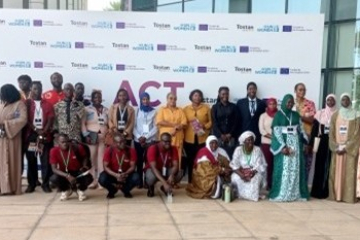
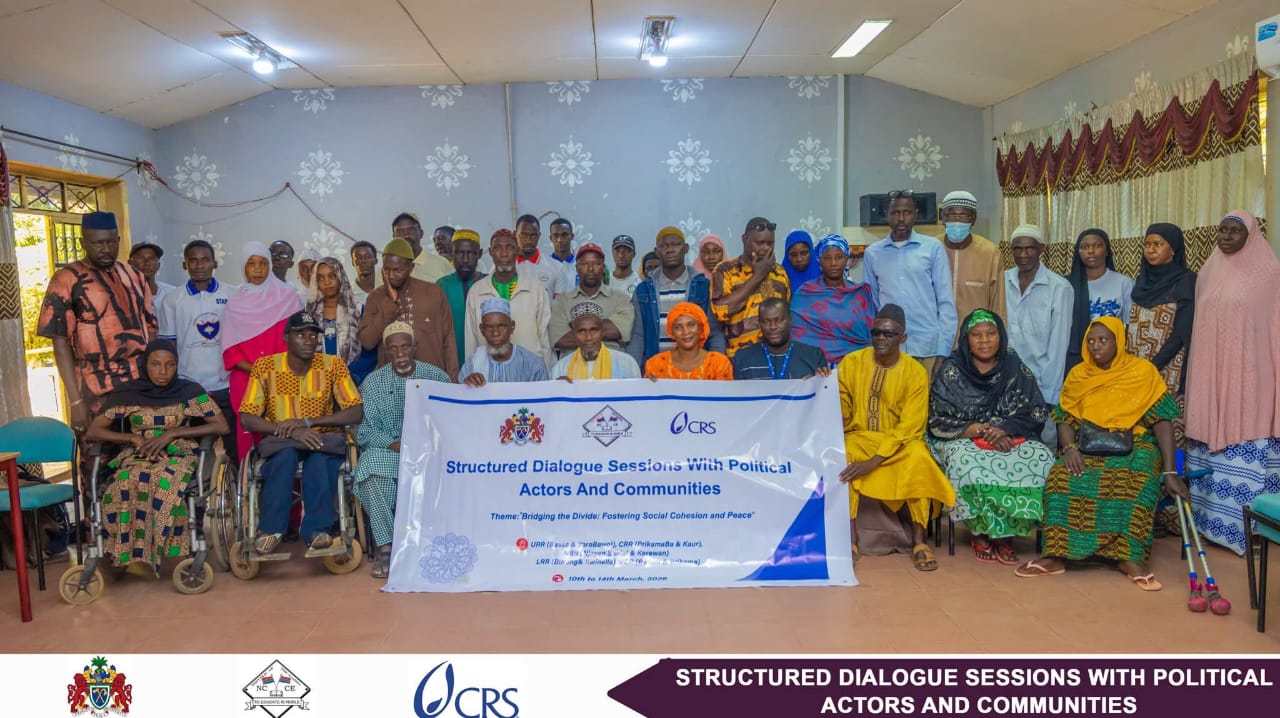
The dialogue sessions target 550 of the most influential voices, including political actors, community leaders, youth, women, civil society organisations, persons with disabilities, and religious leaders across the five regions of Upper River Region (URR), Central River Region (CRR), North Bank Region (NBR), Lower River Region (LRR), and West Coast Region (WCR).
Speaking during the opening ceremony, Ansumana Ceesay, NCCE's program manager, expressed appreciation for the timely engagement with stakeholders across the regions and thanked CRS for supporting the initiative.
He noted that as the 2026 electoral cycle draws near, avoiding the use of abusive language in public discourse and on social media is vital.
He encourages political actors and communities to embrace dialogue to help maintain peace and adherence to civility.
Pamela R. Jackson Camara, CRS Focal Person for the HOPE Project, expressed appreciation to the participants and commended NCCE for engaging political actors and communities on the importance of peace.
She noted that the dialogue sessions aim to promote inclusion and reduce political polarisation, adding that dialogue remains a powerful tool for preventing violence in society.
She further emphasised that dialogue encourages constructive discussions, strengthens accountability, and promotes mutual understanding among citizens.
According to her, peace cannot be achieved through individual efforts alone but requires collective responsibility and increased civic awareness. She also reaffirmed CRS's commitment to promoting inclusion, particularly for women and persons with disabilities.