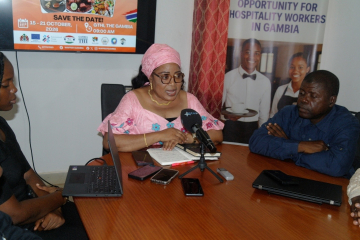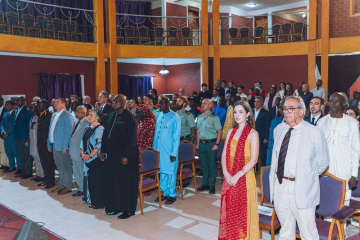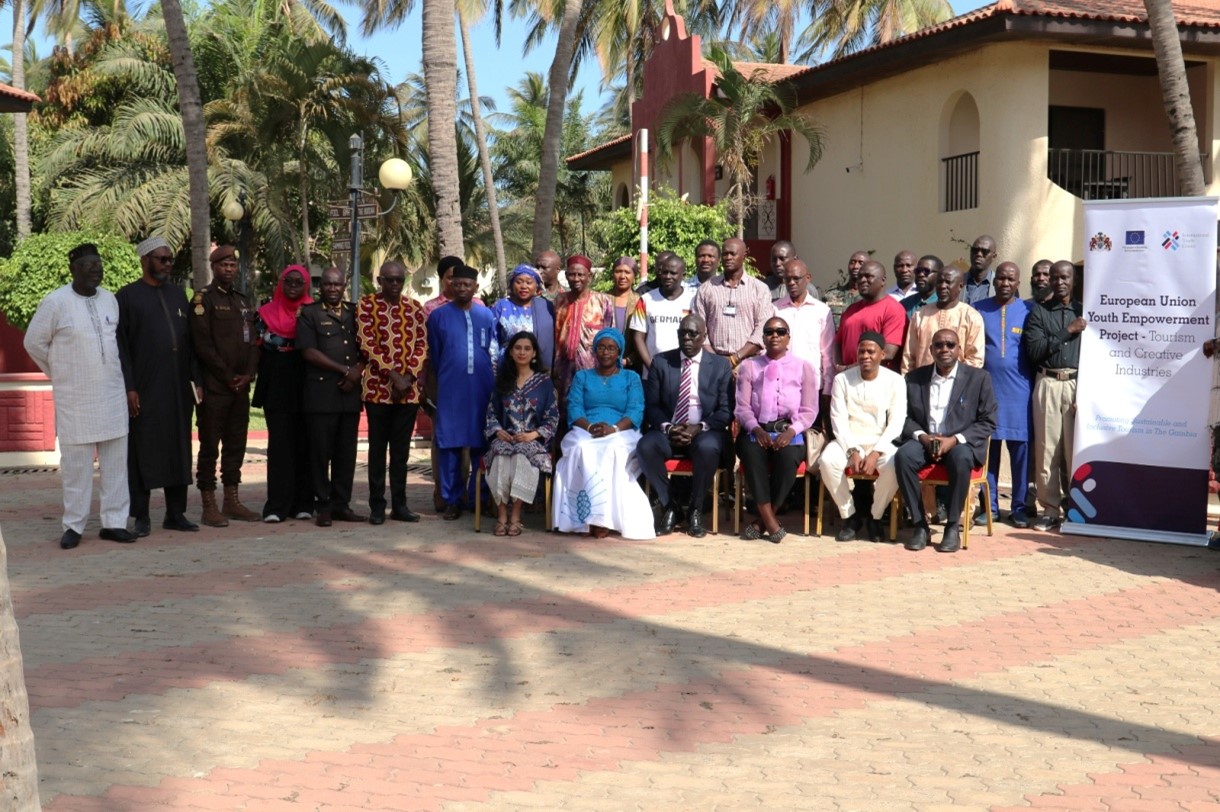
The forum sought to develop a unified national position on cross-border tourism. Outcomes will directly inform The Gambia’s strategy in upcoming bilateral and regional discussions on tourism development and regional mobility.
Discussions focused on visa and entry facilitation, border operations and security procedures, and commercial and tourism operations.
Declaring the dialogue open, Tourism Minister Abdoulie Jobe described the event as timely and strategic as The Gambia works to strengthen its position as a competitive, accessible, and sustainable destination in the sub-region and beyond.
“Tourism remains a vital pillar of the national economy, contributing significantly to employment, foreign exchange earnings, and inclusive growth,” Minister Jobe said. “But the sector’s full potential can only be realised through an efficient, seamless cross-border system that facilitates the movement of tourists, goods, and services.”
“In today’s interconnected world, competitiveness is not only defined by the attractiveness of a destination, but also by the ease with which visitors can access and experience it,” he added.
Jobe urged participants to engage openly and constructively to identify bottlenecks and propose practical, evidence-based solutions. He stressed the need for stronger inter-agency collaboration, digital innovation, improved infrastructure, and security systems that remain effective while being traveller-friendly.
A key expected outcome is the endorsement of a National Resolution Charter to guide cross-border tourism engagement, improve service delivery, and enhance national competitiveness.
Minister Jobe reaffirmed Government’s commitment to translate the dialogue’s outcomes into actionable reforms that strengthen tourism competitiveness and regional integration.
Speaking at the event, Lumana Kamashi, Representative of the EU Delegation to The Gambia, said the EU, in close cooperation with ECOWAS, continues to support regional initiatives to strengthen tourism standards, build capacity, and foster collaboration among member states.
She said these efforts are essential for developing integrated tourism circuits and improving competitiveness across West Africa.
Kamashi highlighted The Gambia’s participation in the Interreg MAC Programme 2021–2027, which promotes cooperation between West Africa and European outermost regions including Madeira, Azores, and the Canary Islands. The programme supports networking, innovation, sustainable development, and internationalisation — all key drivers of cross-border tourism.
She also pointed to the EU’s Global Gateway strategy, which supports investments in transport, energy, and digital infrastructure to improve mobility and tourism flows within Africa and between Africa and Europe.
Kamashi said the dialogue was valuable because it brought together public institutions, private sector actors, and technical experts to identify practical solutions. She urged participants to think strategically and develop recommendations that can be translated into concrete actions.
The dialogue forms part of ongoing efforts to position The Gambia as a preferred tourism destination while promoting stronger regional cooperation and economic growth through tourism.