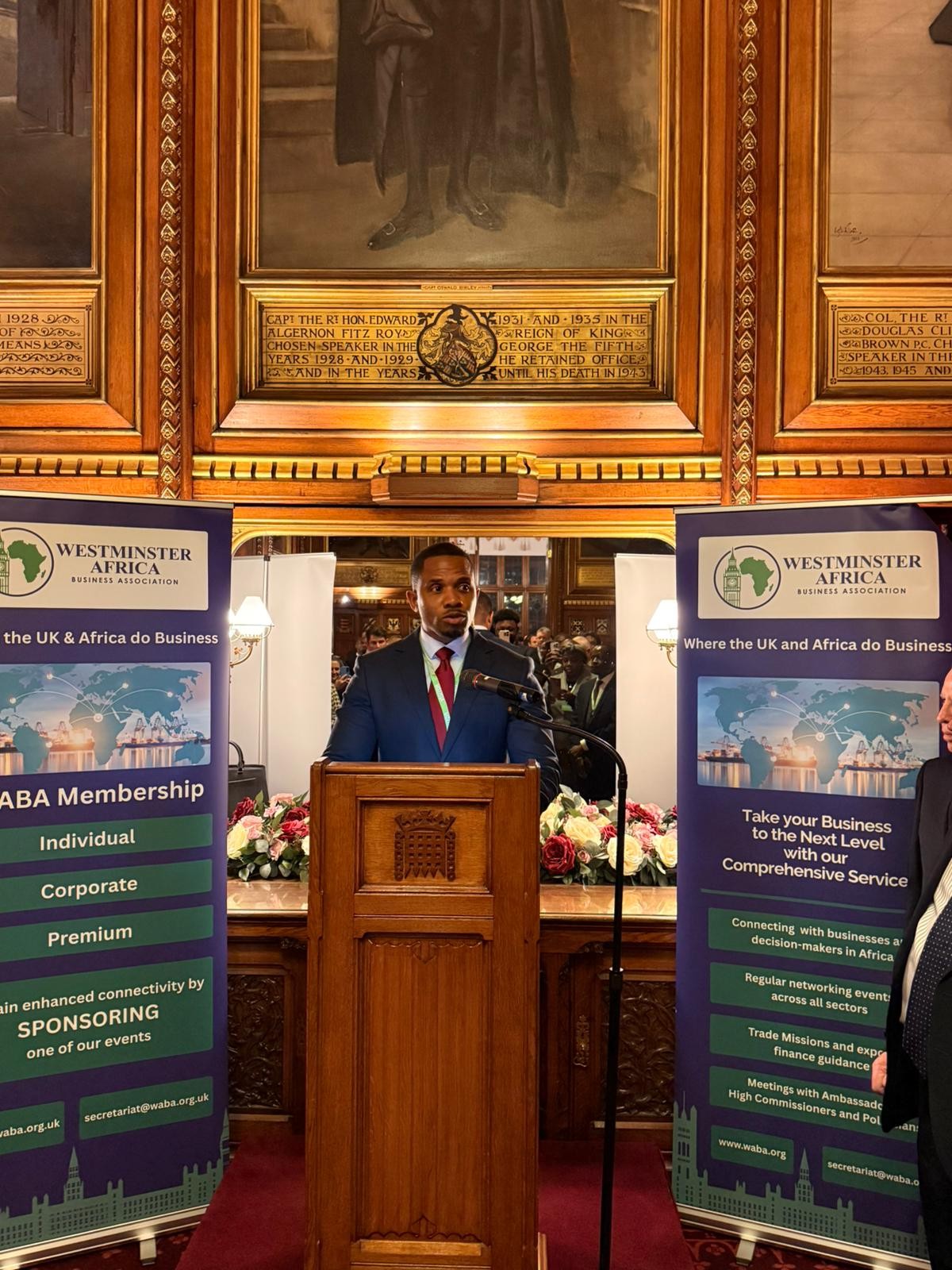
Senior parliamentary figures were in attendance, including Lindsay Hoyle, Speaker of the House of Commons, alongside representatives from the diplomatic and investment community.
Opening his remarks, Dr Ceesay reflected on The Gambia’s political journey, saying the country emerged from 22 years of authoritarian rule and, since 2017, has entered a period of democratic renewal under President Adama Barrow.
The information minister made reference to the country’s stable political climate, strengthened civil liberties and a freer media environment as key foundations for growth, making The Gambia one of the sub-region’s fastest-growing economies.
At the heart of his message was a decisive shift in national outlook — from aid dependency to a partnership model driven by trade and investment.
“The Gambia is ready for business. We are moving away from a mindset of waiting for aid and support. We seek a relationship with Britain built on dignity, mutual respect, trade and investment. We are not asking for charity; we are calling for partnership.”
While acknowledging the depth of historical ties between the Gambia and the UK, Dr Ceesay stressed that economic engagement has yet to match the potential of the relationship.
“It is unfortunate that the UK is not among our leading trading partners, despite being less than six hours from Banjul. We want to rebalance that relationship — not only between Britain and The Gambia, but between Britain and Africa more broadly.”
He described Africa as the “continent of the future,” referencing its youthful population, expanding consumer markets and vast natural resources.
“Africa holds resources Britain needs, and the UK has expertise and capital Africa can use to accelerate development. The opportunity is mutual.”
On the domestic front, Minister Ceesay cited the measurable improvements registered in public services and infrastructure.
“National electricity access has increased from 47% in 2017 to around 75% today, with universal access targeted in the near term. Ongoing road construction, investment in skills centres and broader human capital development were presented as pillars of the country’s economic expansion.”
He also identified priority sectors for foreign investors: Real estate and urban development; Tourism, a traditionally strong sector with renewed scope for UK engagement; agriculture, supported by extensive arable land for large-scale production; renewable energy and fisheries and marine resources.
Thus, Dr Ceesay encouraged a revival of British tourism, acknowledging that UK visitors historically represented a significant share of arrivals, while new hotel developments are increasing capacity.
In closing, he framed the moment as part of a broader national repositioning. “This is the new Gambia we are presenting to the world, a country that is open, stable and ready to work with partners who believe in shared prosperity.”
Other speakers included current and former parliamentarians, among them Priti Patel, Shadow Secretary of State for Foreign, Commonwealth and Development Affairs of United Kingdom, reflecting cross-party interest in strengthening UK–Africa engagement.
The event delivered a clear diplomatic and economic signal: The Gambia is presenting itself not as a recipient, but as a confident partner in trade, investment and long-term cooperation.