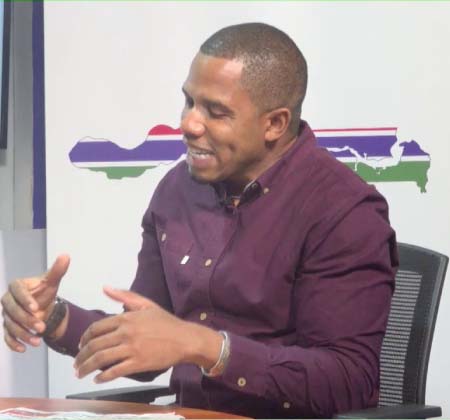
“I don’t believe in draconian laws, there are no draconian laws, there are laws that may not be media friendly, but you don’t just remove laws. You reform them.”
The minister acknowledged that some media-related laws may no longer be fit for purpose but argued that outright repeal would leave a dangerous vacuum. According to him, no country allows the media to operate without checks and balances.
At the center of the debate was accountability. Dr. Ceesay said the Media Council of The Gambia currently lacks legal authority because it is not established by an Act of Parliament. He revealed that government is considering reforms to formally establish the council and grant it regulatory powers.
“We need to transform the Media Council and give it legal backing, that is one of the ways to ensure accountability without undermining press freedom.”
Dr. Ceesay raised serious concerns about the rapid expansion of online media, much of it unlicensed and operating outside the country. He questioned how the state can regulate platforms based abroad but targeting Gambian audiences.
“How do you regulate a media house operating from Japan but feeding news to Gambians?” he asked, admitting that even powerful governments struggle to police online media.
He stressed that while full control is impossible, government has a responsibility to protect citizens from abuse, misinformation, hate speech, and content that threatens peace and stability.
As an election year approaches, the minister revealed that his ministry is developing a powered Misinformation and Disinformation Response Platform, funded by ECOWAS. The platform, currently under construction, will fact-check information in real time and counter fake news and deep fakes.
“AI is now being used to spread misinformation, we are also going to use AI to fight it.”
He warned that manipulated videos and deepfake audio could incite violence, erode public trust, and undermine elections if left unchecked.
On human rights, Dr. Ceesay made a strong claim that no journalist has been jailed for doing their job since President Adama Barrow took office, contrasting the current environment with past eras marked by arrests, torture, and disappearances.
“The difference is huge, The Gambia is one of the freest media environments” he has encountered, even compared to some Western countries.”
Despite disagreements, the minister praised the Gambian media for generally acting responsibly, noting that while sensationalism exists, the sector is not toxic or driven by hate speech.
He concluded by reaffirming government’s stance; “media freedom is essential, but it must operate within a framework that protects public interest, dignity, and national cohesion.”
“We can reform laws, but we cannot abolish safeguards and leave society exposed.”