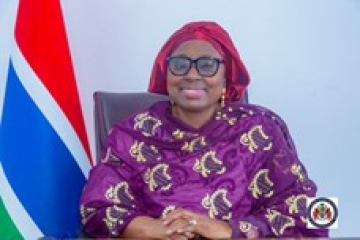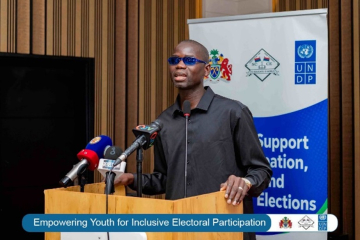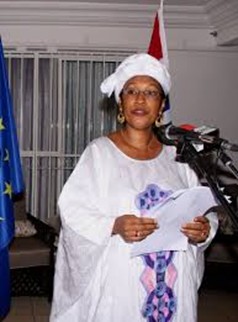
In a statement to mark the International Day for Universal Access to Information (IDUAI) 2026, commemorated on September 28, Chairperson Neneh MacDouall-Gaye said information integrity is vital in the digital age.
This year’s theme is “Upholding Information Integrity in the Digital Age: The Role of Access to Information in Addressing Information Disorder.”
MacDouall-Gaye said access to information is a fundamental human right guaranteed under Article 19 of the International Covenant on Civil and Political Rights, and recognized by UNESCO and the UN General Assembly which declared September 28 as IDUAI.
“Access to information is far more than an abstract legal concept. It is the lifeblood of institutional accountability. It is what transforms an individual from a passive observer of governance into an active, empowered architect of national development,” she said.
She said since the signing of the Access to Information (ATI) Act 2021 by President Adama Barrow and the establishment of the Information Commission in 2024, the Commission has been working to make the right to know a practical reality across the country.
She acknowledged implementation challenges, particularly low public awareness and resource constraints.
“Citizens cannot fully exercise their right to access information if they are unaware that such a right exists, or if they do not understand the procedures for requesting and receiving information,” she said.
Despite constraints in 2025 and 2026, MacDouall-Gaye said the Commission has conducted sensitization across all regions and engaged public institutions on their obligations under the law, including proactive disclosure.
She warned that in the digital age, misinformation can spread with a single click, dividing communities and eroding trust in democratic institutions, especially during elections.
“During elections, unchecked misinformation does more than mislead voters. It divides communities, undermines social cohesion, and erodes trust in democratic institutions. The answer to this is information integrity,” she said.
She stressed that when election bodies, public agencies, journalists and citizens can access and verify reliable information, rumours lose their power.
She thanked the Ministry of Information, UNDP The Gambia, The Gambia Press Union, Gambia Participates and TANGO for supporting stakeholder sensitization.