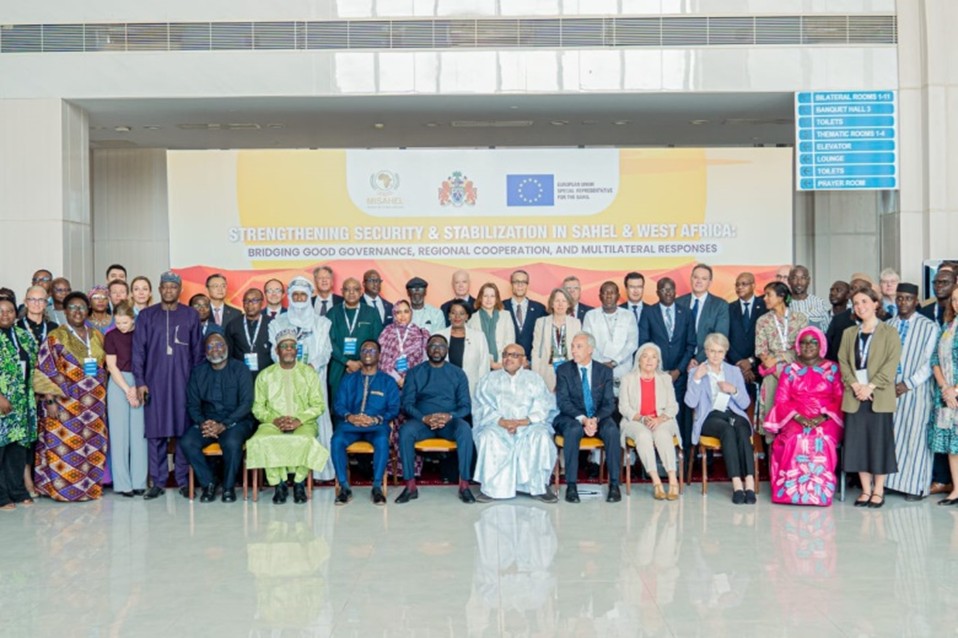
The two-day meeting brought together representatives from ECOWAS, the African Union, the European Union, the United Nations, and other international partners to explore ways of bridging good governance, regional cooperation, and multilateral responses to growing insecurity in the region.
The workshop comes at a time West Africa and the Sahel continue to face persistent and complex challenges, including the rise of terrorism and violent extremism, fragile political transitions, and the increasing risk of instability spilling into coastal states.
Participants noted that these interconnected threats continue to undermine regional stability and require coordinated, integrated, and sustainable responses.
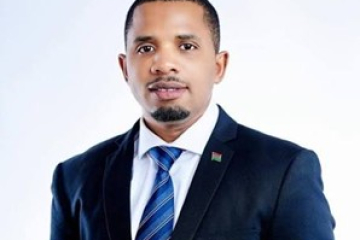
Delivering the opening statement on behalf of President Adama Barrow, the Minister for Higher Education, Research, Science and Technology, Professor Pierre Gomez, stressed the need for collective action grounded in dialogue, inclusion, and shared responsibility.
In the statement, President Barrow warned that instability in the Sahel continues to affect neighbouring coastal countries, disrupting livelihoods and reversing development gains. He emphasised that security cannot be achieved through military means alone, calling for a comprehensive approach that links governance, justice, and development.
The President also highlighted the importance of investing in human security, particularly in education, employment, climate adaptation, and institutional reform.
Reaffirming The Gambia’s support for African-led solutions, the statement underscored the need to strengthen regional mechanisms such as MISAHEL, describing it as a key platform for coordination and stabilisation efforts.
President Barrow further shared The Gambia’s democratic experience since 2017, pointing to ongoing reforms in transitional justice and security sector governance as examples of national efforts towards peacebuilding.
The statement concluded with a call for urgency and renewed commitment from all partners to ensure that the outcomes of the forum translate into concrete action for a more peaceful and stable West Africa.
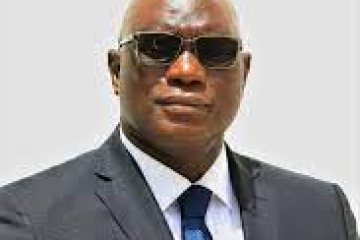
Speaking at the forum, Dr Mamadou Tangara, African Union High Representative and Head of the Sahel, said lasting stability cannot be achieved without access to basic services and justice, just as governance cannot take root without security.
He stressed that inclusion must be treated as a strategic priority, noting that peace and stabilisation efforts often fail without the involvement of women, youth, communities, as well as traditional and religious leaders. He added that local ownership, cultural understanding, and respect for community dignity are essential for sustainable peace.
Dr Tangara also called for a shift in approach, urging stakeholders to move beyond monitoring and reporting to actively shaping conditions for durable peace, with greater emphasis on impact rather than bureaucracy.
He further highlighted the need for a new partnership model based on mutual respect, African-led priorities, shared analysis, and long-term institutional capacity, rather than short-term outputs.
On regional cooperation, he commended ECOWAS Commission President Dr Omar Alieu Touray for efforts to engage with the Alliance of Sahel States (AES), describing the situation as a “family matter” that requires collective action, particularly in the fight against terrorism.
In his remarks, ECOWAS Commission President Dr Touray emphasised that the Sahel and ECOWAS are inseparable, warning that insecurity in the Sahel will inevitably spill into coastal West Africa if not addressed collectively.
On the withdrawal of some Sahel countries from ECOWAS, Dr Touray noted that institutional differences should not affect ordinary citizens, stressing the need to preserve the gains of regional integration.
He also pointed out that the first official ECOWAS-AES meeting took place in May 2025, with ministers from Niger, Mali, and Burkina Faso in attendance.