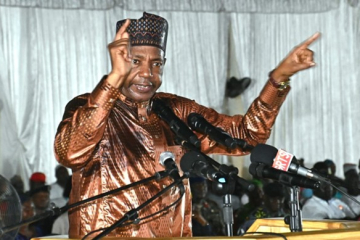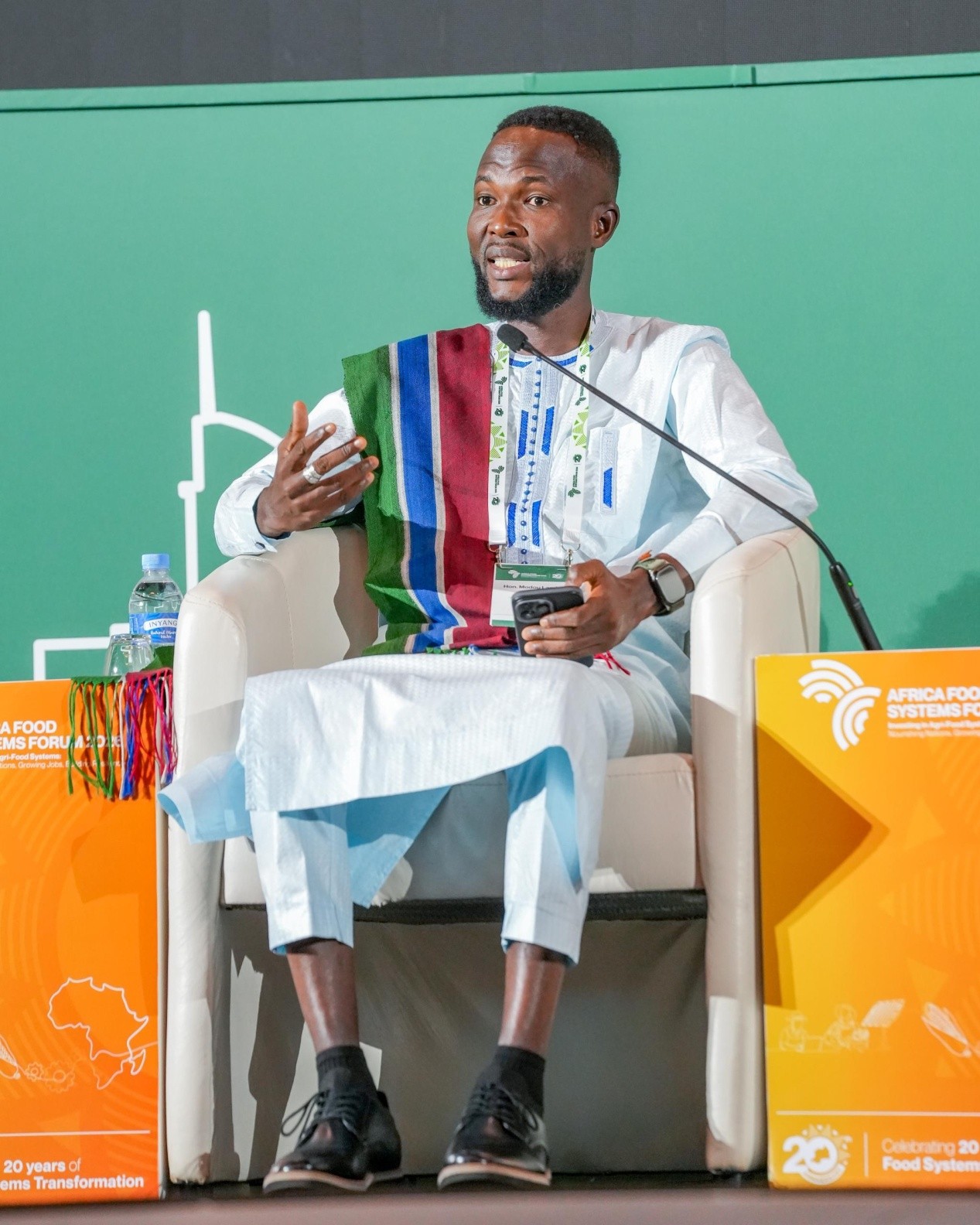
Addressing participants, the lawmaker said the challenges confronting Africa’s food systems could not be adequately addressed without tackling inequalities that continue to limit women’s access to land, finance, technology, markets and decision-making spaces.
“You cannot fix Africa’s food systems without fixing equality for women,” Bah said.
He noted that women play a critical role across Africa’s food systems, from production and processing to trading and feeding households, yet their contribution is often treated as a social or “women’s issue” rather than an economic priority.
According to Bah, closing the gender gap in agriculture could lift millions of people out of hunger while increasing agricultural yields by between 20 and 30 percent.
He identified land ownership, access to finance, markets and technology, and representation in decision-making as some of the major barriers limiting women’s productivity.
On land, Bah said women own less than 20 percent of farmland, arguing that the absence of secure land rights often prevents women from accessing loans and investing in agricultural activities.
He further noted that women receive less than 10 percent of agricultural credit, leaving many dependent on small-scale support rather than the investment capital required to expand their businesses.
The Banjul North lawmaker also highlighted limited access to irrigation, storage facilities, digital information and agricultural technologies as challenges confronting women farmers. These gaps, he said, contribute to significant post-harvest losses across the continent.
Bah called for governments to move beyond policies that merely encourage women to become “resilient” in the face of crises and instead create systems that position women as central actors in solving Africa’s food and economic challenges.
He proposed joint land titling, dedicated budgets for women-led cooperatives, tailored financial products, agricultural insurance and input support, as well as stronger connections between women’s groups and regional markets under the African Continental Free Trade Area.
He also advocated greater investment in technologies such as solar dryers and processing machines, alongside agricultural extension services delivered in local languages.
According to him, reducing the burden of unpaid care work is equally important. Investments in water, childcare and energy infrastructure, he said, would give women more time to engage in farming, processing, business and leadership.
“Parliament must track it,” Bah said, stressing the importance of legislative oversight in ensuring that commitments to women in agriculture are backed by actual resources.
He envisioned a resilient food system as one where a woman farmer can secure land, access a loan, participate in regional markets and provide nutritious food for her family.
“When we cultivate equality today, we harvest food security, jobs, and health for the whole continent tomorrow,” Bah said. “Women are not the future of food systems. Women are the present.”