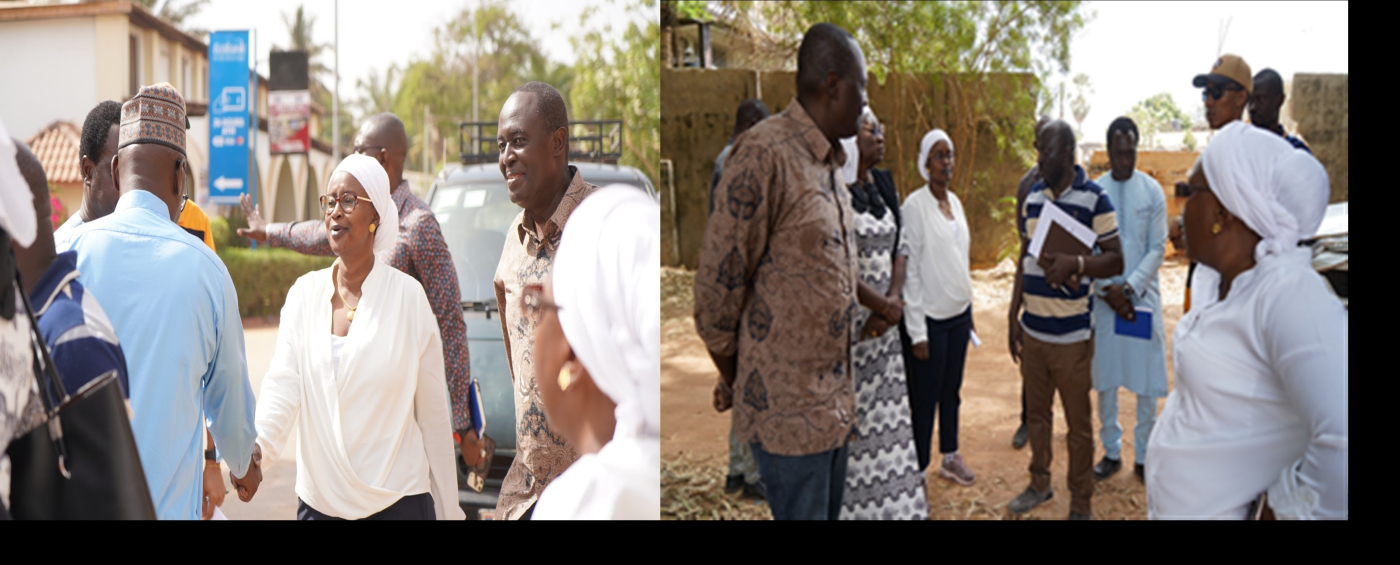
The visit forms part of the Governing Body’s continuous oversight functions of tourism development, destination management and land-use issues within key tourism zones.
During the tour, the delegation visited a wide range of locations and sites including Bakau Cape Point Beach, Fajara Golf Course, the BB Craft Market, Kotu Bridge, the BB and Palma strips, development sites in Bijilo, Brufut, Tanji, Tujereng, Sanyang and Gunjur.
The day’s tour also witnessed visits to areas affected by encroachment, contested land matters, beach access concerns, stalled tourism projects, beach bars, sand mining and abandoned quarry sites.
The delegation reviewed GTBoard beautification interventions and considered the importance of maintaining an attractive, orderly and environmentally sustainable destination.
At Bakau Cape Point Beach, the tour party’s attention was drawn to the coconut tree planting initiative undertaken through collaboration of National Environment Agency, the Gambia Tourism Board and other tourism stakeholders, with the Board currently assuming responsibility for the care of the trees.
The delegation also considered proposals for further streetscape and beautification improvements in other tourism zones.
The tour further created an opportunity for direct interaction with tourism stakeholders, including tourist guides, tourist taxi operators and craft market vendors. These engagements highlighted the value of listening to front-line operators whose daily experiences shape visitor impressions of The Gambia. Their perspectives are important in identifying practical issues affecting visitor movement, destination cleanliness, trading conditions, public order, infrastructure and the overall tourism experience.
Particular attention was paid to tourism land allocations at various stages of development, as the delegation observed projects that have advanced, projects facing development challenges, and sites where lack of progress, encroachment or disputed claims raise concerns for orderly tourism planning.
These observations reinforced the importance of ensuring that land within tourism areas is used in a manner consistent with tourism policy, approved development purposes and the broader public interest in sustaining the destination.
The delegation further examined environmental and land-use pressures affecting the Tourism Development Area and nearby coastal tourism zones. These included the impact of mining and quarrying activity, the condition of old and abandoned quarry sites along the coastline, and the implications of encroachment and incompatible uses for the long-term integrity of the tourism product.
Thus, the visit underscored the need to protect tourism assets, coastal landscapes and beach environments, not only for current operators and visitors, but also for future investment and destination resilience.
Highlighting the importance of supporting viable tourism investment, the delegation took note of both positive examples of completed or progressing projects and sites that have remained undeveloped or non-operational for prolonged periods.
Moreover, the familiarisation exercise also served both as an inspection and as a practical policy exercise in understanding where tourism development is moving, where it is being impeded, and where corrective action may be required.
Shortly after the conducted tour, Momodou Bamba Saho, Chair of the Governing Body of GTBoard, described the tour as useful as it enabled members of the Governing Body gain firsthand information on conditions across the tourism estate and related coastal areas.
He emphasised that effective tourism governance requires decisions to be informed by field observation as well as by reports and submissions.
“Today’s tour has been valuable in giving the Governing Body first-hand appreciation of the opportunities and challenges across our tourism areas.”
The GTBoard, he added, remains committed to destination improvement, orderly tourism development, environmental stewardship, stakeholder engagement and the protection of tourism land for its intended purposes.
“It is important that decisions on tourism development, land use and destination management are informed by what is actually happening on the ground. The Gambia Tourism Board remains committed to supporting orderly tourism development, protecting the integrity of tourism land, and improving the visitor environment.”
Saho also assured that the board will continue to work with relevant public institutions, local communities, tourism operators and investors to promote a cleaner, more attractive and better managed destination, while addressing longstanding development, environmental and land administration challenges affecting the sector.