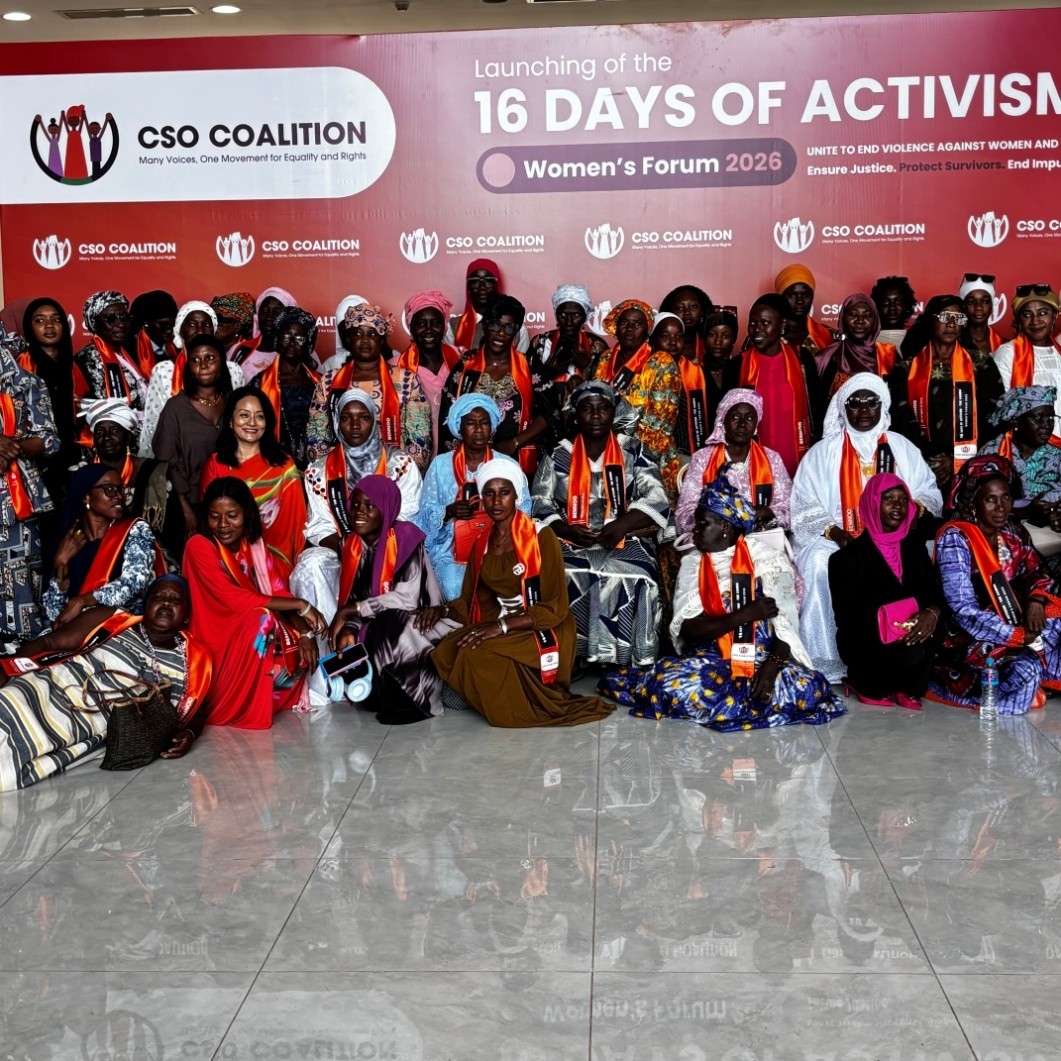
The CSO Coalition of The Gambia has challenged presidential candidates to commit to protecting women’s rights, maintaining the ban on female genital mutilation (FGM) and strengthening the fight against gender-based violence, warning that the protection of women and girls must never be compromised.
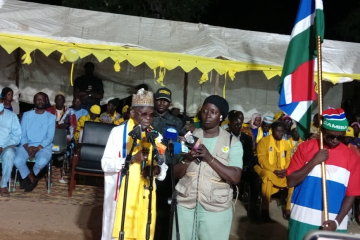
The coalition made the call on Tuesday during the launch of the 16 Days of Activism Against Gender-Based Violence and the Women’s Forum 2026, held at the OIC Conference Centre.
The commemoration, held under the theme “Unite to End Violence Against Women and Girls: Ensure Justice, Protect Survivors, End Impunity,” brought together women from across the country to discuss women’s participation in national development, governance and the protection of their fundamental rights.
The engagement comes at a critical moment as The Gambia prepares for the December 5 presidential election, with civil society organisations seeking clear and practical commitments from candidates on issues affecting women and girls.
Speaking at the event, Yadicon Njie Eribo, Chairperson of the CSO Coalition Gambia, said elections provide citizens with the opportunity to choose their leaders while offering political candidates an important platform to demonstrate their commitment to human rights, dignity, equality and women’s participation.
She said ending violence against women and girls requires more than expressions of solidarity, stressing the need for concrete commitments, effective laws, adequate resources, accessible justice and political leadership that prioritises the protection and empowerment of women.
According to her, despite progress made by The Gambia in advancing women’s rights and addressing gender inequality, significant challenges remain.
“Violence against women and girls continues to affect individuals, families and communities,” she said, adding that survivors often face barriers in accessing justice, protection, psychosocial support and other essential services.
She also expressed concern over the continued underrepresentation of women in political decision-making and public leadership positions.
Eribo said the coalition was engaging presidential candidates on three priority demands, including the protection of the FGM ban and women’s rights, calling on candidates to commit to maintaining and fully enforcing the Women’s Amendment Act 2015, alongside strengthening the implementation of laws addressing gender-based violence.
She insisted that existing legal safeguards must be upheld and effectively implemented to protect women and girls from violence and harmful practices.
Delivering the keynote address on women’s participation in national development and governance, Fatou Baldeh, Executive Director of Women in Liberation and Leadership, said violence against women and girls was not merely a women’s issue but a national development and human rights concern.
She said the global scale of violence against women remained alarming, with nearly one in three women experiencing physical or sexual violence during their lifetime.
Citing the 2019–2020 Gambia Demographic and Health Survey, Baldeh said 27 per cent of women aged 15 to 49 had experienced physical violence since the age of 15, while seven per cent had experienced sexual violence.
She further noted that approximately 73 per cent of women in the same age group had undergone FGM.
Baldeh warned that the threat of reversing the FGM ban was deeply concerning, describing the Women’s Amendment Act as a landmark achievement reflecting the country’s commitment to protecting girls from harm.
She said women accounted for 56 per cent of registered voters, representing approximately 644,000 voters, and therefore deserved meaningful participation in governance and national decision-making.
“We are not asking for a lot. They are fair, practical, and we know these are achievable,” she said.
Baldeh urged political leaders to recognise women’s voices beyond election campaigns, stressing that women must continue to participate in shaping the country’s future.
She said The Gambia could not credibly defend human rights internationally while failing to uphold the rights and dignity of women and girls at home.