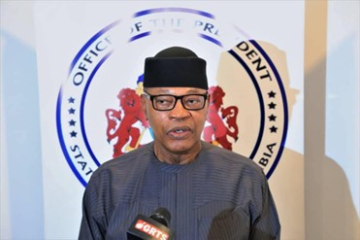
The revelations from NAWEC's recent press conference were deeply troubling. They confirm what GFA members have long warned: this government has no coherent, long-term strategy for addressing the country's energy needs. The Gambian people deserve better.
This crisis is the predictable consequence of poor leadership, characterised by misplaced priorities and political short-sightedness.
Rather than investing in domestic electricity generation, which is the very foundation of a functional energy sector, the Adama Barrow government has chosen to pursue a strategy centered almost entirely on expanding distribution. Connecting households with electrical wires is politically convenient; it is visible, photographable, and easy to campaign on. But it puts the cart before the horse. Expanding the distribution network while generation capacity remains critically inadequate does not give Gambians access to electricity - it gives them access to darkness through new wires.
The numbers speak for themselves. The Gambia currently generates less than 30 megawatts of electricity domestically. The vast majority of our supply (over 50MW) is imported from Senegal. This is not only among the lowest generation capacity on the African continent; it is lower than what we produced under previous administrations. By this measure, we have not progressed - we have regressed.
The government's mismanagement of the energy sector has been compounded by a series of costly and avoidable decisions.
Chief among them was the $200 million spent over seven years purchasing electricity from a floating generator at inflated prices. This staggering expenditure brought no lasting generation capacity to the country and represented a profound waste of public resources. At the same time, the reckless expansion of the distribution network, which has been pursued not out of strategic necessity but short-term, opportunistic decision-making, has deepened an already serious electricity deficit.
Our dangerous overdependence on imported electricity carries severe and cascading consequences for the entire economy. It strips the country of energy independence, leaving us entirely exposed to decisions made abroad - a vulnerability we are experiencing in real time today. It widens our trade deficit, accelerates the depreciation of the dalasi, and drives up the cost of living for ordinary Gambians. As the dalasi weakens, NAWEC's operating costs rise, its losses mount, and the burden on public finances grows heavier. This in turn feeds a cycle of fiscal deficits and mounting domestic and external debt.
These are self-inflicted wounds. And they are avoidable. GFA believes that reliable and affordable electricity is achievable, but only under a government that is serious, strategic, and willing to prioritize the national interest over political gain. The party advocates for the following foundational reforms:
- Invest in domestic energy generation. The government must urgently invest in the construction of local power plants to increase the country's energy generation This should include investment in renewable energy such as solar. Greater domestic energy generation means greater energy independence and reduced vulnerability to external shocks. The government must be strategic and foresighted in its planning and execution of important national infrastructure.
- Reform NAWEC comprehensively. The national utility has been chronically mismanaged and is accumulating debt at a rate that threatens the country's fiscal Structural, operational, and governance reforms are urgently needed.
- Make distribution follow generation. Expansion of the electricity network must be sequenced properly: generation capacity first, distribution second. Crucially, any significant expansion of the distribution network must be accompanied by commensurate investment in maintenance infrastructure.
When these reforms are implemented with discipline and political will, Gambian households, educational institutions, health facilities and businesses will have what they deserve: meaningful, reliable, and affordable access to electricity. The Gambian people have waited long enough for reforms that never arrived. GFA is committed to providing the serious leadership this moment demands. A GFA-led government will align electricity generation with distribution, delivering dependable power through a balanced mix of sources to deliver energy security.