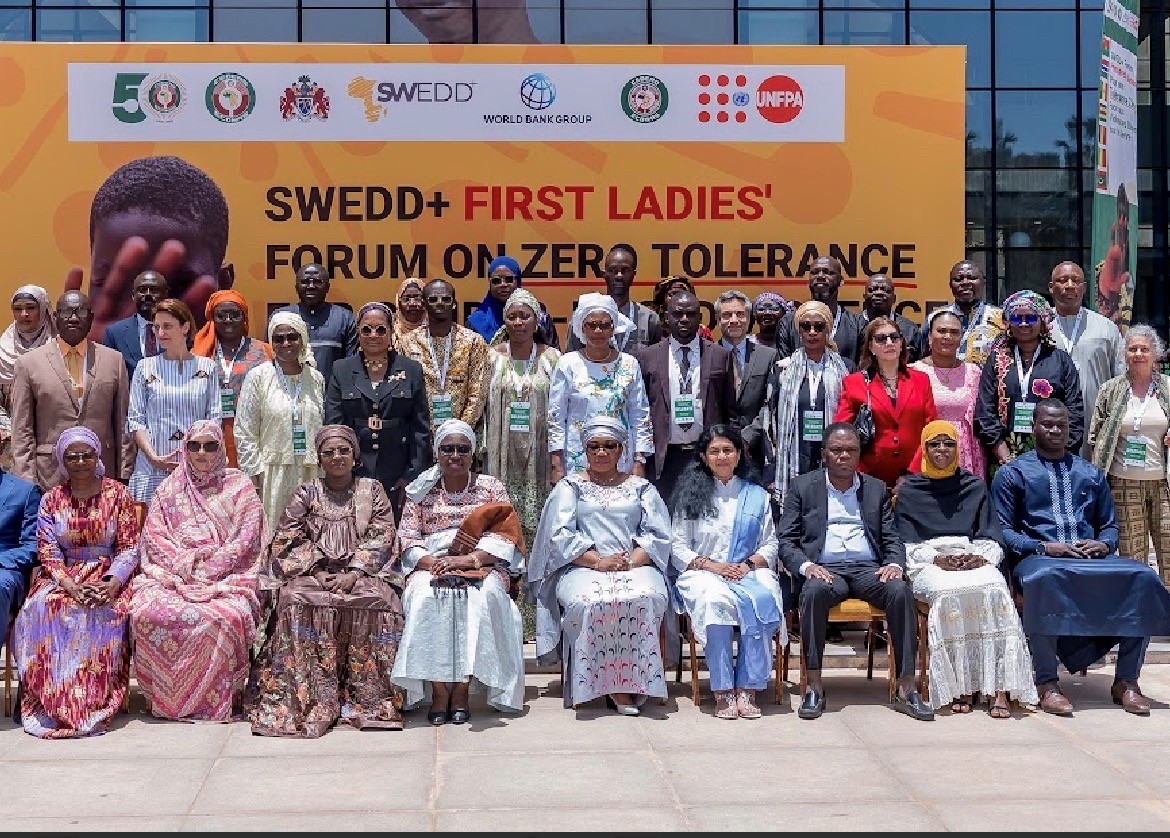
The gathering, which began earlier in the week, brought together ministers, development partners, and delegates from SWEDD+ countries, signalling a renewed regional commitment to ending GBV through coordinated and measurable actions.
At the close of the meeting, ministers endorsed the Regional Gender-Based Violence Roadmap (2026–2028), adopted the GBV Legal Scorecard, and approved a joint communiqué to be presented at the First Ladies’ conference marking a significant shift from commitments to concrete implementation.
Speaking at the forum, Trina Haque, Regional Director for Human Development at the World Bank, reaffirmed the institution’s strong commitment to supporting countries in tackling GBV through coordinated and results-driven interventions.
She stressed that gender-based violence remains one of the most serious barriers to development in the region, warning that no country can reach its full potential if women and girls—who constitute half of the population—continue to live in fear, exclusion, and silence.
“Ending gender-based violence is not optional, it is central to development,” she emphasised.
Haque revealed alarming statistics, noting that 41 percent of girls in West and Central Africa are married before the age of 18, while more than 144 million women and girls across Africa have undergone female genital mutilation. She added that such practices continue to undermine education, health outcomes, and economic participation, with long-term intergenerational consequences.
She highlighted the SWEDD Plus programme as a flagship regional initiative driving investments in girls’ education, health, and empowerment, stressing that integrated approaches across sectors remain key to achieving lasting impact.
Similarly, Edwige Adekambi Domingo, Director of the Regional Technical Secretariat of SWEDD at UNFPA, described the forum as a critical turning point in confronting harmful practices and violence against women and girls.
She warned that 4.5 million girls in the region remain at risk of female genital mutilation in 2026, stressing that behind every statistic is a life whose potential could be destroyed by violence.
“We cannot accept this reality. We must act with urgency and deliver results,” she said.
Domingo commended The Gambia for demonstrating strong political will, citing the establishment of the country’s first integrated GBV survivor support centre and a dedicated annual budget allocation of approximately $3 million to strengthen prevention and response efforts.
Adding another dimension to the discussion, Edwin W. Harris Jr., Director General of the Inter-Governmental Action Group against Money Laundering in West Africa (GIABA), drew attention to the link between financial crimes and gender-based violence.
He warned that corruption and money laundering deprive governments of critical resources needed to support survivors, including healthcare, counselling, and rehabilitation services.
“Addressing financial crime is essential to strengthening national responses to gender-based violence,” he stated, urging ministers to prioritize accountability and resource allocation.
For her part, Habibatou Drammeh, Minister of Basic and Secondary Education of The Gambia, underscored the importance of a whole-of-government approach, noting that GBV is a cross-cutting issue affecting health, education, justice, and social protection sectors.
She highlighted education as a powerful tool for prevention, emphasizing the role of schools in promoting equality, shaping values, and creating safe learning environments free from abuse.
Dr Drammeh also pointed to national efforts, including strengthened guidance and counselling services, community sensitization programmes, and initiatives supporting girls’ education and protection.
The minister stressed that tackling GBV requires strong collaboration among governments, civil society, and development partners, adding that sustained action and political will are critical to achieving zero tolerance.
The ministerial forum sets the stage for the First Ladies’ conference, where regional leaders are expected to reinforce political commitment and drive the implementation of the newly adopted framework.
With a unified voice and clear roadmap, stakeholders say the region is now better positioned to move beyond rhetoric and deliver tangible results in ending gender-based violence.