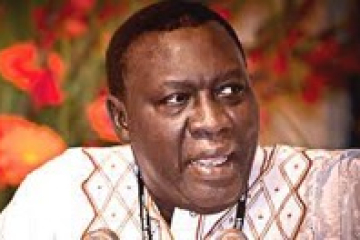
Nyakassi M.B. Sanyang, Statistician General, said it is their core mandate as the national statistics office to provide official statistics and to effectively coordinate the National Statistical System such that it will adequately respond to the statistical data needs of Government and other users.
Mr Sanyang explained that the coordination aspect is wide; it covers capacity building which includes providing the right training to members of the national statistical system so that quality statistics which follows international standards are produced and disseminated, and to ensure that the right equipment and statistical infrastructure is used.
"It’s our goal to produce a critical mass of statisticians with diverse background in the country to support timely production of quality statistics and we believe a lot can be done with close collaboration with key stakeholders and development partners," he added.
He emphasised that with support from the HISWACA project, we are better positioned to support the process of harmonising and improving statistics in the country. "We began this journey in 2025 by providing scholarships to 15 non-GBoS staff to study statistics, data science, GIS, Economics, Computer Science, and Data Analytics at Master’s level in the UK and other parts of Europe and we intend to provide more in 2026," he stated.
According to him, the Ministry of Agriculture is a key member of the national statistical system and would endeavour to closely work with various institutions. "We need to develop our agricultural sector and this can’t be done in the absence of good policies, which are informed by high quality statistics," he noted, saying: "We will continue to collaborate with your team to ensure that capacity is built and the right equipment and statistical infrastructure is available."
Dr Demba Sabally, Minister for Agriculture, Livestock and Food Security, said reliable statistics will help his office to understand the realities of farmers across the country: their challenges, opportunities, and contributions to national growth.
He indicated that the national agriculture sample census will provide the evidence based facts they need to design policies, allocate resources, and monitor progress towards the national development goals and the SDGs.
The 85 motorbikes will enable their enumerators and field officers to reach farmers in every corner of the country, he assured, while acknowledging the partners for the support, which demonstrates a shared commitment to strengthening agricultural statistics and building resilience in food systems.
HISWACA Project Coordinator Mohammed L. Janneh and FAO deputy Country Coordinator Mustapha Ceesay stressed the importance of data in agriculture. They both expressed commitment to supporting the Ministry of Agriculture for Gambian farmers' and the country's benefit.