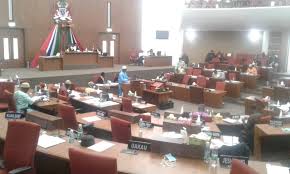
The Gambia is moving to strengthen the protection of musicians and record producers against online piracy, with the National Assembly considering the ratification of an international treaty aimed at safeguarding their rights and earnings in the digital age.
Attorney General and Minister for Justice Dawda A. Jallow tabled the motion on Monday before Parliament for the ratification of the World Intellectual Property Organization (WIPO) Performance and Phonograms Treaty (WPPT), adopted in 1996 and which entered into force in 2002.
The treaty seeks to protect performers and record producers as music increasingly reaches audiences through streaming, downloads, mobile phones and social media.
Jallow told lawmakers that young Gambian musicians now reach audiences beyond the country’s borders through digital platforms, but their work can be copied and shared online without any financial return if adequate protections are not in place.
“Our young musicians now reach audiences far beyond our borders through digital platforms yet, without these protections, their work can be copied and shared online with no return to them,” he said.
He added that piracy also deprives the state of revenue and discourages investment in the creative industries.
Under the treaty, performers and record producers would enjoy rights over the production, distribution and rental of recorded performances, as well as the online use of their work. It also provides for royalties in specified circumstances, recognition of performers and protection against changes to performances that could damage their reputations.
Jallow said ratification would allow Gambian collecting societies to collect royalties from digital uses and participate in international systems for distributing payments.
He added that it would provide a basis for updating the Copyright Act of 2004 to address challenges in the digital environment and bring the country closer to international standards.
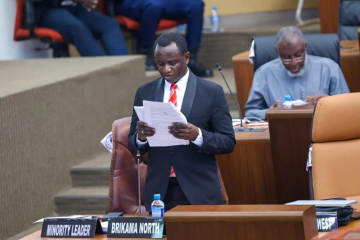
Seconding the motion, the Majority Leader and member for Kantora said protecting creative work had become more important with the advancement of artificial intelligence.
“It is very inhuman or unfair for someone to sit at a corner and come up with a very good and nice melodious song and just be told that the song has been played or been mimicked somewhere else,” he said.
He called for stronger safeguards for upcoming and established Gambian artists, saying their work should be protected and their efforts rewarded.
The member for Upper Niumi, however, questioned the delay in ratifying the treaty, which was adopted in 1996.
In response, Jallow said he could not provide a definite explanation for the delay but noted that the government had established a database of treaties signed by The Gambia and was working to catch up with outstanding ratifications.
He said his ministry would work with the Ministry of Tourism, Arts and Culture and the National Centre for Arts and Culture to bring any necessary amendments to domestic laws before the Assembly.