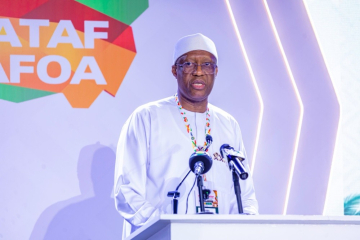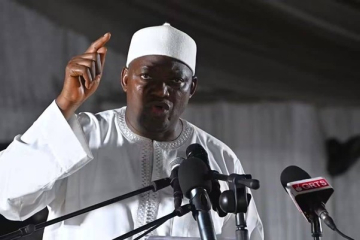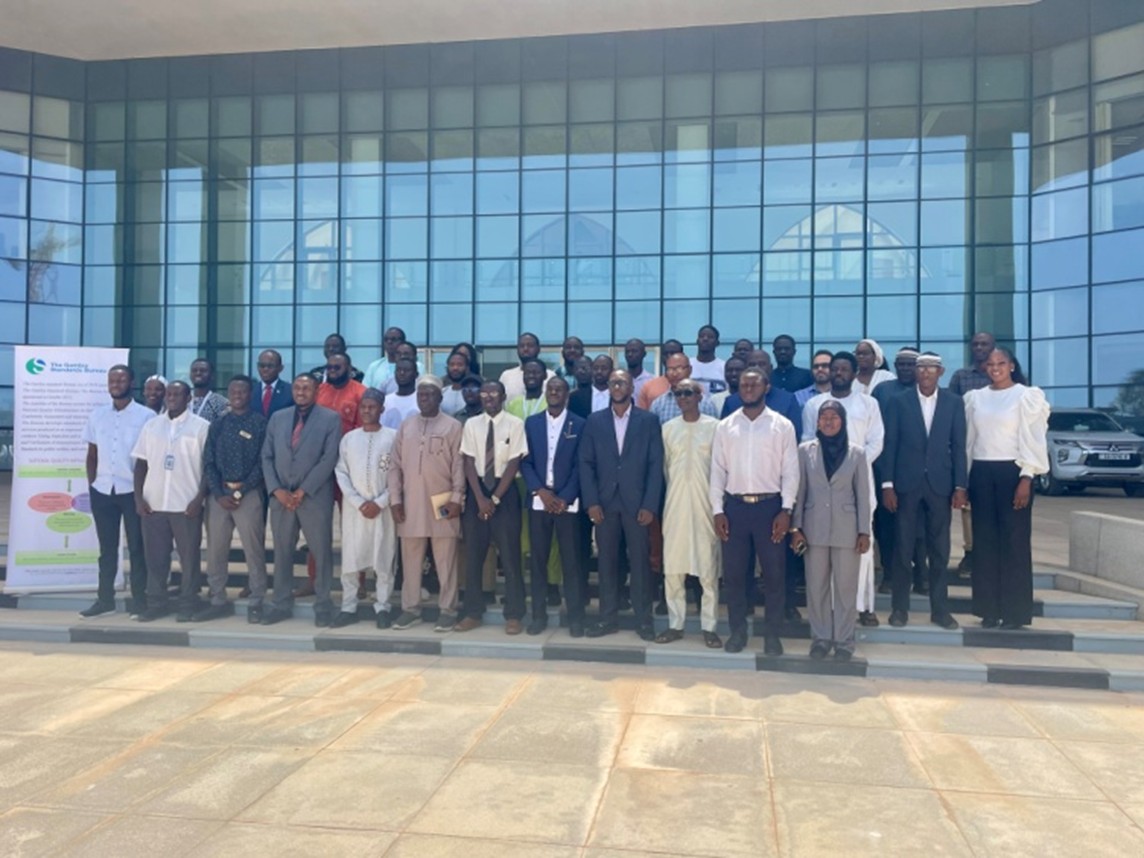
The engagement, spearheaded by The Gambia Standards Bureau in collaboration with the Ministry of Petroleum and Energy (MoPEM) and the Public Utilities Regulatory Authority( PURA), brought together policymakers, regulators, oil marketing companies, depot operators, distributors, and consumer representatives to chart a roadmap for implementing national fuel quality standards.
The dialogue which took place at SDKJCC is expected to produce a consensus-driven roadmap outlining practical steps for implementing and enforcing fuel standards nationwide. Sessions include technical presentations, panel discussions, and plenary engagements aimed at fostering collaboration among stakeholders.
Delivering the opening statement, director general of The Gambia Standards Bureau, Papa Secka, underscored the Bureau’s central role in safeguarding quality across the petroleum value chain from importation and storage to distribution and retail.
He stressed that adherence to standards is not optional; warning that failure to comply undermines the entire pricing structure and operational integrity of the sector.
“Fuel quality remains a critical bottleneck,” Secka said, noting that national pricing systems are anchored on international benchmarks such as Platts NWE ARA.
He added that The Gambia must also meet regional obligations under ECOWAS directives on fuel quality harmonisation, which have faced delays in implementation.
Chairperson of the National Technical Committee on Petroleum Products, Dodou Njie, highlighted that The Gambia’s fuel standards were developed locally by Gambian experts, aligning closely with ECOWAS requirements.
“We did not wait to be told what standards to adopt, we defined them ourselves,” Njie said, describing the process as a milestone driven by economic, social, and regional considerations.
He emphasised that harmonised standards would boost regional trade, enhance competitiveness, and remove technical barriers, enabling smoother cross-border petroleum distribution. Njie also pointed to safety, sustainability, and innovation as key pillars underpinning the standards framework.
Representing PURA, the director of Petroleum and Energy, Musa Njie, reaffirmed the regulator’s commitment to enforcing fuel quality standards while balancing consumer protection, industry viability, and national development goals.
He acknowledged longstanding constraints, particularly the lack of adequate laboratory infrastructure to consistently test fuel quality.
However, he noted progress, including partnerships with Senegal for sample testing and the emergence of new laboratory facilities within The Gambia.
“We are moving towards a future where enforcement will be stronger and more reliable,” Njie said, adding that regulatory oversight extends beyond policing to facilitating practical compliance across the sector.
For his part, Lamin Camara, permanent secretary at the Ministry of Petroleum and Energy, described the forum as both timely and necessary amid growing concerns over fuel quality.
He highlighted reforms in the sector, including the liberalisation of petroleum imports, increased storage capacity, and improved transparency in pricing mechanisms.
Nevertheless, he admitted that challenges persist, particularly in aligning supply chains with ECOWAS standards.
Despite delays in meeting the January 2025 regional deadline for fuel quality harmonisation, Camara assured stakeholders of government commitment to full implementation.
“We have no option but to address these challenges head-on,” he stated. “Every actor in the value chain has a role to play in ensuring that Gambians receive quality fuel.”