
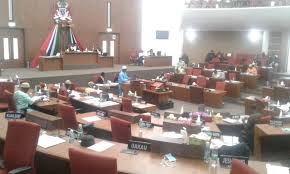
Hon Speaker Fabakary Tombong Jatta, swiftly interjected, saying the member had got it wrong, explaining that government must first be formally notified of resolutions before the 30-day clock can apply. He added that ministers can only present responses during Assembly sessions, which are scheduled by the House itself. According to the Speaker, responses might have been ready “three, four, five months ago,” but could not be tabled until Parliament sat.
Hon. Jammeh insisted that even if replies were prepared earlier, members had not been informed. He pointed out they received the documents only minutes before the sitting.
Hon. Sulayman Saho, of Central Badibou backed the concern, stressing that Parliament is governed by rules. He demanded clarity on whether the ministers were within the timeframe, arguing that when documents reach the Office of the Clerk, members “need to know.”
Hon. Alhagie Babou Ceesay of Sabach Sanjal countered sharply. Citing the same Standing Order, he argued that what is required is submission to the Assembly not distribution to members. Using the date on the letter, 6 August, he said the reply had indeed been submitted on time, meaning the order is not in order.
Hon. Alhagie Mbowe, of Upper Saloum, reminded colleagues that they were dealing with two different FPAC resolutions.
He recalled that the Vice-President had earlier taken personal responsibility to collect sector responses because of gaps in communication. The letter now before the Assembly, he argued, concerns a different resolution and was properly submitted.
Speaker Jatta returned to clarify two issues: the Assembly receiving a document, and the later administrative act of distributing it to members. He stressed that distribution is an administrative issue and that if members feel documents came late, they can request an adjournment, a practice done many times before. “This one is about scrutiny,” he added, insisting that ministers can still respond in person and members can later raise questions.
Hon. Musa Cham of Serekunda then stepped in, acknowledging the validity of the point of order but insisting the rule refers to replies being sent to the Assembly, not directly to members. He urged the Speaker to give a ruling to prevent future confusion.
The Speaker said “when you write, you don’t write to the Assembly here; all letters are addressed to the Clerk,” he said, urging the debate to continue.
Hon. Babou Ceesay rose again, arguing the Order Paper itself was part of the issue. It cites Order 100, but he believed it should also mention “Order 47, which governs ministerial statements and member engagement. He maintained that if the Clerk confirms timely submission, the Speaker should rule against the point of order.
Hon. Jammeh, however, insisted that the Order Paper guided members to Order 100 and nothing else. He argued that confusion between Orders 47 and 100 should not be created by the Office of the Clerk. He emphasised that the letter from the Ministry of Public Service was dated 6 August 2025, while the resolution was adopted 6 July 2025 making the 30-day calculation straightforward and binding.
Hon Kebba Lang Fofana, the Nominated Member, corrected earlier dates and strengthened the constitutional argument. He read directly from Section 75(6) defining misconduct in office, stressing that to hold ministers in contempt, their actions must bring their office into disrepute. Since ministers submitted replies within 30 days, he said, they did not meet the threshold for misconduct.
He argued that interventions by the Clerk such as delaying distribution should not be used to judge ministers. “How do you hold the ministers accountable to that?” he asked. He submitted that the point of order was invalid because Section 100 must be read together with the Constitution, and the constitutional threshold for contempt had not been met.
After hearing all sides, Speaker Jatta concluded that he was better informed now than ever but would not rule immediately. He promised to consult further and deliver a decision tomorrow or the day after.