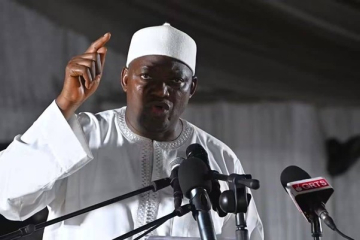
According to Jobarteh, the deep sea port contract became effective on 14 February 2025, with pre-construction activities expected to be completed by 13 February 2026. However, one year on, work has not started because both the government and the concessionaire have not met certain obligations under the agreement.
He explained that the renegotiation aims to ensure that default clauses in the contract are enforced. These clauses allow bonds to be encashed if the concessionaire fails to meet specific commitments, with the investor required to replenish those bonds.
Jobarteh told lawmakers that on the government’s side, leases and sub-leases for the project site are yet to be finalised. Albayrak, on the other hand, still needs to carry out geotechnical investigations at the proposed port site. He said the original master plan required the port infrastructure to be built at sea only, but site investigations later showed the need for both offshore and onshore construction, including land reclamation.
“The lease cannot be issued for an area where there is no land,” Jobarteh said, explaining that reclamation must first take place before any lease can be granted. He added that the aim is to conclude negotiations before the pre-construction deadline and sign an addendum to the contract.
The GPA managing director also raised concerns about increasing sedimentation at the Port of Banjul. He said dredging, which was previously required every two years, is now needed within six months as sand quickly returns and reduces navigable depth. This, he explained, is due to the port’s location along a river channel affected by tidal movements.
He stressed that deeper channels are essential as global shipping lines use larger vessels to cut costs. While the government is responsible for dredging the main access channel, the GPA has stepped in to support dredging efforts to avoid delays, with reimbursement expected.
Lawmakers also questioned whether activities such as sand mining and shoreline structures are worsening sedimentation. Jobarteh said scientific studies, including hydrographic and geotechnical surveys, will be needed to determine the causes.
Officials maintained that keeping safe navigation depths at the Port of Banjul, which handles most of the country’s trade, is critical to avoiding higher costs for businesses and consumers.