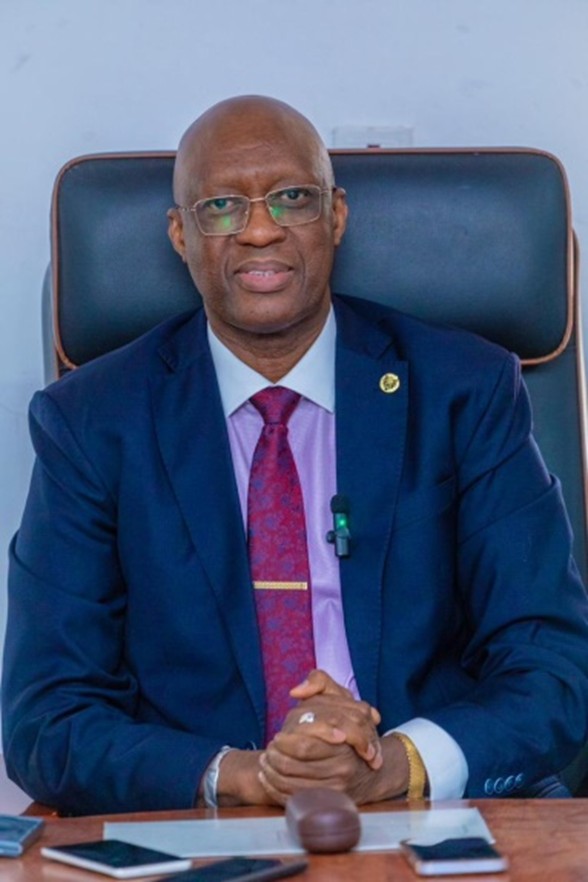
“Platforms such as this are critical for fostering meaningful dialogue between government and the private sector,” he said. “They bring together policymakers, the private sector, and professional bodies to engage in meaningful dialogue on the business environment and future of our economy. Such engagements are critical if we are to build trust, deepen collaboration, and co-create solutions to the challenges we face as a nation.”
According to CG Darboe, for decades, many African countries, including The Gambia, relied heavily on external support to finance development priorities. “However, we are increasingly witnessing a shift. We are now witnessing what many now term ‘donor fatigue’.”
He added that donor fatigue is real, amid global economic constraints and uncertainty.
He said Africa continues to grapple with growing debt burden, as in several African countries, available data indicate that as much as 60% of government revenue is now devoted to debt servicing.
“This situation raises fundamental question,” he pondered, saying investment in health, education and infrastructure remains a challenge.
According to CG Darboe, domestic resources mobilization provides a more stable and sustainable pathway for development financing. “While international trade revenue are often volatile, particularly in a world characterized by geopolitical tensions, shifting supply chains, and economic uncertainty, domestic resources mobilization is therefore no longer fiscal objective , but a matter of national resilience and economic sovereignty,” he stated.
For The Gambia, he explained, this consideration has translated into a strategic shift towards domestic resources mobilization as the most reliable and sustainable sources of public finance.
“Taxation, as we often emphasize, is not merely a tool for revenue collection, it is the foundation of economic sovereignty,” he stated. “It strengthens accountability, reinforces the social contracts, and enables governments to pursue development agendas aligned with national priorities.”
GRA has been entrusted with the responsibility of championing this national agenda, CG Darboe said: “It is an enormous responsibility, and one that we embrace with commitment and determination. However, the GRA cannot achieve this alone.”
He said the private sector remains the engine of economic growth, innovation, and job creation, adding that within this ecosystem, CFOs and finance directors play a uniquely strategic role.
“You are the link between the corporate world and tax system, and importantly, you are central to the promotion of voluntary compliance, which is the backbone of any effective tax administration,” he noted, saying: “Voluntary compliance benefits both the taxpayers and the revenue authority. For taxpayers, it reduces the risk of penalties, audits, and enforcement actions, it enhances corporate credibility and support financial planning.
“For the revenue authority, it reduces enforcement costs, improves efficiency, and creates a more predictable and stable revenue system. More fundamentally, voluntary compliance strengthens trust between the taxpayers and the state. Trust is the currency which modern tax system is built upon.”
He said further: “At the Gambia Revenue Authority, we recognize that fostering voluntarily compliance requires more than enforcement; it requires partnership. We are therefore committed to working closely with the private sector and professional bodies to create an environment that supports voluntary compliance while reducing its cost.”