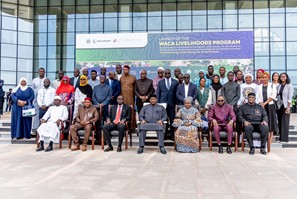
The WACA Livelihood Improvement Programme, coordinated by the Ministry of Environment, Climate Change and Natural Resources, is set to directly benefit at least 4,000 Gambians over the next two years through targeted investments in sustainable jobs and climate-smart enterprises. The programme forms part of the broader $45 million WACA Resilience Investment Project, which aims to protect and restore vulnerable coastal areas, reduce the risk of flooding, tackle pollution and improve the quality of life for residents along the Kotu Stream in the Greater Banjul Area.
Through this initiative, USD5 million will be channelled into livelihood-enhancing activities such as urban farming, horticulture, solid waste management, recycling and compost production. It will also support the growth of social enterprises and other environmentally friendly industries. Beneficiaries will receive comprehensive support that includes skills training, mentorship, business advisory services, access to markets, and start-up or expansion grants designed to help them transform their small-scale activities into sustainable, income-generating enterprises.
Addressing participants at the launch, President Barrow underscored the government’s dedication to inclusive development and climate resilience. He explained that highly populated areas like the Kotu Stream corridor are particularly vulnerable to environmental risks, including flooding and pollution, which threaten livelihoods, food security and human dignity.
“This programme goes beyond funding alone,” Barrow said. “It is about empowering people, strengthening their resilience, and restoring dignity to our communities. It is an investment in the potential of our women, our youth, and persons with disabilities, who are at the heart of building a prosperous and climate-resilient Gambia.”
The President also expressed deep appreciation to the World Bank for its continued support, describing it as a trusted partner in The Gambia’s development journey. He further acknowledged the International Trade Centre (ITC) for its collaboration in delivering the livelihood component of the programme and strengthening market access for local entrepreneurs.
World Bank Representative Matarr Touray, speaking at the event, hailed the launch as a critical milestone for vulnerable communities along the Kotu Stream. He highlighted that market assessments reveal a high dependence on natural resources in the area, with many jobs particularly those dominated by women remaining informal, low-paid and environmentally vulnerable. The programme, he said, will directly address these challenges by improving job quality and inclusion through entrepreneurship training, grants, and financial support for individuals, groups, cooperatives and micro, small and medium enterprises.
ITC Country Director Yusupha Keita described the programme as “a moment of purpose and partnership,” noting that building economic resilience begins with people, their skills, ideas, and their ability to connect to markets. He emphasised that the livelihood initiative offers a comprehensive package designed to turn survival activities into sustainable enterprises, enabling local entrepreneurs to formalise, grow, and contribute meaningfully to the national economy.
Representing the WACA Project, Ma Sanneh Landing Ceesay highlighted that the livelihood programme was designed following a comprehensive assessment conducted in 2024, which engaged communities along the Kotu Stream, including women, youth and persons with disabilities. Their inputs shaped interventions tailored to local challenges, skills gaps and market opportunities.
Mr Ceesay further explained that while immediate support to beneficiaries is already underway, feasibility studies and detailed engineering designs for the restoration and re-profiling of the full 11.2-kilometre Kotu Stream are expected to be completed in the first quarter of 2026. This will be followed by civil works aimed at reducing flood risk, improving environmental quality, and creating climate-resilient livelihoods simultaneously.
The programme’s integrated approach, he said, ensures that communities along the stream will benefit not only from improved infrastructure but also from cleaner environments, better waste management, and sustainable economic opportunities. With its strong emphasis on inclusion, climate adaptation and enterprise development, the WACA Livelihood Improvement Programme represents a transformative step in The Gambia’s drive towards a greener, safer and more resilient economy.
“This is more than a project. It is a vision for a future where every Gambian, regardless of their background or circumstance, has the tools, support and opportunity to thrive, adapt to climate change, and contribute to their communities,” Mr Ceesay concluded.