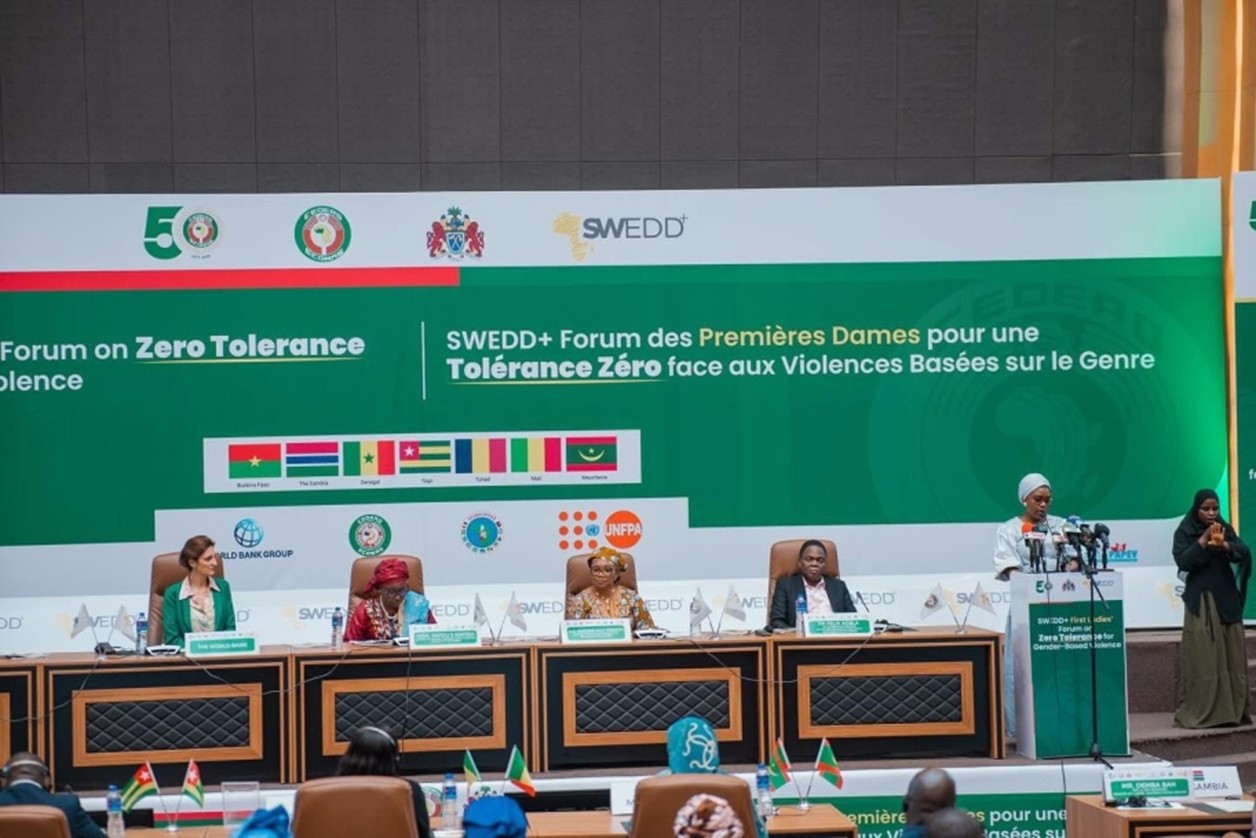
The forum is designed to galvanise the influence of First Ladies and translate high-level commitments into concrete action to end violence against women and girls.
Delivering her statement, the UNFPA Country Representative Ndey Rose Sarr, described the forum as a critical platform to reinforce collective action and accelerate progress in protecting women and girls.
She painted a grim picture of the scale of the crisis, revealing that more than 8 million women and girls across west and central Africa required urgent support due to GBV in 2024 alone. Of reported cases, 38 percent involved rape or sexual assault, while 37 percent were linked to intimate partner violence.
“These are not just numbers, but millions of lives disrupted and futures at risk,” she said.
She further warned that harmful practices continue to persist at alarming levels, noting that about 41 percent of girls in the region are married before the age of 18, with some countries recording significantly higher rates. Female genital mutilation (FGM) also remains widespread, with an estimated 4.5 million girls at risk annually.
Beyond the human cost, she stressed the economic burden, revealing that complications from FGM cost health systems an estimated $1.4 billion each year.
Also addressing the forum, Eleonora Cavagnero, Senior Economist at the World Bank and SWEDD+ Task Team Leader, described GBV as a major barrier to development and prosperity.
“Gender-based violence is not only a violation of rights; it is a development crisis,” she said, noting that it limits girls’ education, constrains women’s economic participation, weakens health outcomes and undermines social cohesion.
She emphasised that achieving zero tolerance is a shared regional responsibility, adding that protecting women and girls is fundamental to stability and sustainable development.
Cavagnero highlighted that the SWEDD+ project—described as the World Bank’s largest regional investment dedicated to women and girls—is focused on prevention, survivor support and empowerment.
Minister for Gender, Children and Social Welfare, Fatou Kinteh, described the forum as both timely and necessary, noting that GBV remains one of the most widespread violations of human rights.
“This gathering is a powerful demonstration of regional solidarity and shared responsibility,” she said.
She stressed that the forum provides an opportunity to transform ideas into practical and inclusive strategies that reflect the realities of survivors and communities.
The minister reaffirmed The Gambia’s commitment to advancing gender equality, highlighting progress made through legal reforms and strengthened institutional frameworks.
She pointed to the country’s adherence to key international and regional instruments, including the Maputo Protocol, which provides a comprehensive framework for protecting women’s rights.
Also speaking, H.E. Miatta Lilly French, ECOWAS Resident Representative to The Gambia, delivered a strong call for action, warning that gaps between policy and implementation continue to allow violence to persist.
She noted that in conflict-affected areas, sexual violence is often used as a weapon, while across the region, access to justice remains extremely limited.
According to her, less than 10 percent of survivors seek help, and fewer than one percent of reported cases result in convictions.
“We cannot fight what we cannot measure,” she said, calling for harmonised data systems across member states to effectively track progress.
“This is not a ceremonial dialogue,” she stressed. “We must move from diagnosis to concrete action.”