
Gambian youth have continued to respond to civic duty not only on the agricultural fields, IT space, or other walks of life and income generation activity, but also in agitating and protecting fellow citizens by leading civic education, driving anti-corruption movements, and building collaborative security frameworks.
Making up approximately 60% of the population, young people are transitioning from victims of past autocratic rule to active shields of the country’s modern democracy.
Human Rights Training: Youth organisations actively train state security forces on critical protection issues, such as avoiding gender-based violence and preventing electoral violence.
Community Policing Frameworks: Young leaders collaborate with security institutions through community engagement units, working to humanize law enforcement and build civilian trust.
Transitional Justice Monitoring: Utilizing tools like the UN Peacebuilding Youth in Motion initiative, youth advocate for accountability, ensuring that human rights violations from the dictatorship era are never repeated.
Legislative Advocacy: The National Youth Parliament acts as a non-partisan watchdog, leading widespread voter education campaigns to protect the citizen's right to peaceful, informed voting.
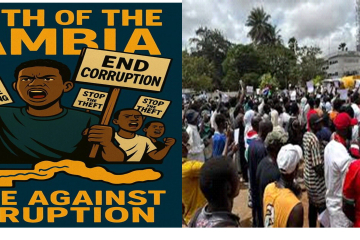
Anti-Corruption Movements: Organisations like Gambians Against Looted Assets (GALA) launch nationwide peaceful protests to demand transparency and safeguard public funds meant for the population.
Budget Accountability: Groups such as A-Plus Gambia track government expenditure, protecting public infrastructure and services from financial mismanagement.
Digital Inclusions: Youth tech innovators partner with entities like UNICEF Gambia to build educational mobile tools, explicitly safeguarding vulnerable children and those with hearing impairments.
Environmental Security: Grassroots youth organisations combat land-grabbing and illegal environmental destruction to safeguard natural resources and local agricultural livelihoods.
Meanwhile, Gambian youth play a vital, expanding role in protecting citizens by driving civic accountability, defending human rights, and building community-level safety and peace.
Over 60% of the Gambian population is under the age of 25. This demographic shift has transformed young people into primary agents of national security and social welfare following the country's transition from autocratic rule.
Youth organisations actively bridge gaps between civilian populations and state security forces.
Young activists train police officers on human rights, gender-based violence (GBV), and election-related violence to ensure law enforcement protects citizens instead of exploiting them.
Grassroots, youth-led movements- such as Gambians Against Looted Assets (GALA)- mobilize massive peaceful protests to demand economic transparency and government accountability.
By fighting corruption and land-grabbing, youth protect the economic livelihoods and public assets of everyday citizens.
Through strategic initiatives like National Action Plan on Youth, Peace and Security (YPS), youth lead community conflict-resolution and cross-border security outreach programs to minimize tribal divisions and crime.
Through strategic initiatives such as National Action Plan on Youth, Peace and Security (YPS), youth lead community conflict-resolution and cross-border security outreach programmes to minimize tribalism in line with Democratic and Transitional Justice Advocacy.
Organisations like the National Youth Parliament advocate for civic education and monitor government institutions to prevent a return to dictatorship.
Youth-driven groups track public expenditure to ensure public funds are used for citizen safety and services divisions and crime.
Young innovators develop localised technological tools, such as mobile apps and inclusion platforms, designed to protect vulnerable demographics like children and disabled citizens.