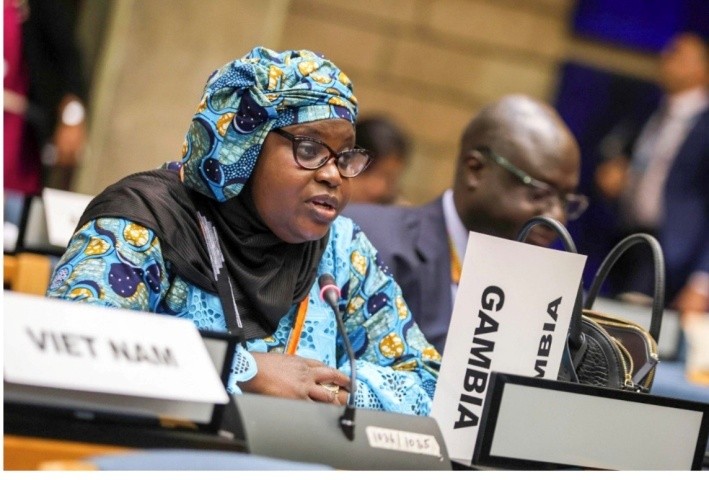
She underscored the country’s growing environmental pressures linked to rapid urbanization, including solid and liquid waste management challenges and plastic pollution, which threaten public and environmental health. Despite limited technical and financial capacity, the Minister emphasized The Gambia’s determination to pursue innovative solutions.
Key national initiatives highlighted include the development of an integrated national waste management system through a public-private partnership model, aimed at improving municipal waste services, establishing sanitary landfills and strengthening recycling processes. She also announced Cabinet approval of a National Action Plan to reduce plastic pollution by 82 percent within the next ten years.
While acknowledging The Gambia’s minimal contribution to global climate change, the Minister stressed the country’s strong political will to tackle pollution. She called for enhanced international cooperation, increased climate and environmental financing, technology transfer and capacity-building, particularly for Least Developed Countries (LDCs) and Small Island Developing States (SIDS).
Concluding her statement, Minister Manjang described UNEA-7 as a vital platform for accelerating global action on pollution and sustainable resource management, reaffirming The Gambia’s commitment to working with all partners towards a cleaner, healthier and more resilient planet.