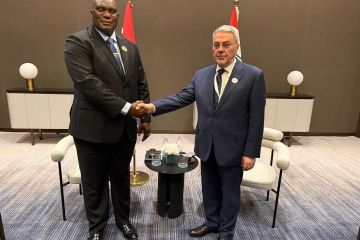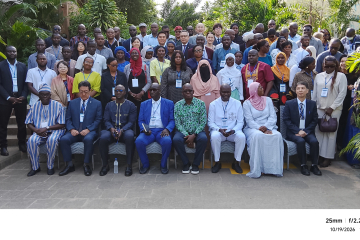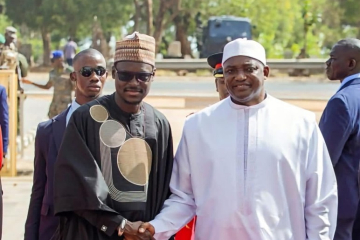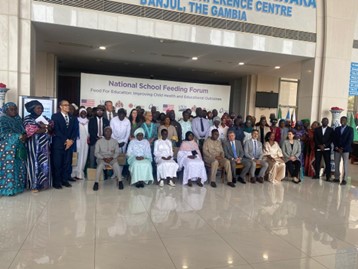
Speaking on behalf of President Adama Barrow, Vice President Muhammad B.S. Jallow told the National School Feeding Forum that school meals are “not merely social concerns” but “a strategic investment that directly contributes to human capital development, poverty reduction, education outcomes, and long‑term economic growth.”
Jallow stressed that children, food and education are “inseparable pillars of national development” and “the foundation upon which our nation’s future is built.” He added:
“If we are to secure sustainable development, reduce inequality and build resilience, we must ensure that every Gambian child has access to quality education and proper nutrition.”
The programme now covers all public early childhood development (ECD) and lower basic schools, representing 66% of eligible institutions, and reaches 101,669 learners — about 87% of children enrolled in public schools.
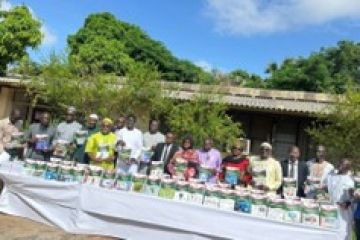
The United States, through the USDA McGovern‑Dole International Food for Education and Child Nutrition Programme, has invested $28.5 million over five years. Catholic Relief Services (CRS) implements the initiative in 186 schools, serving 63,000 children a hot meal every school day.
USDA representative Erik Syungle described the programme as “a profound commitment to the future of Gambian children,” emphasising that “sustainability and graduation are at the heart of the McGovern‑Dole programme.”
US Chargé d’Affaires Eugene S. Young called it “one of the best days to be a diplomat,” noting that the initiative benefits both American farmers and Gambian families. “Our goal has always been a Gambian‑led, Gambian‑financed school feeding programme that endures long after US assistance concludes,” he said.
CRS Country Manager Dr Amulai Touray reported that more than 17.7 million meals have been served since 2023, with 4,670 metric tonnes of US agricultural commodities distributed and $2 million directed to local procurement.
“No child in The Gambia should ever have to face the school day on an empty stomach,” she said.
Touray added that public resources alone will not be sufficient, stressing that the success of the programme depends on shared responsibility among government, development partners, the private sector and communities.
Minister for Basic and Secondary Education, Dr Habibatou Drammeh highlighted that school feeding has evolved into “a nationally owned programme deeply embedded within our education system” and “a catalyst for broader socioeconomic development, linking classrooms to farms.”