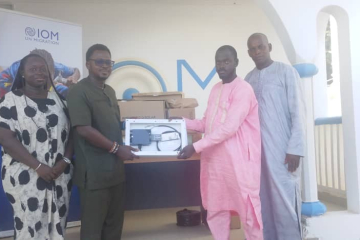
GNPC Managing Director commends TAKE-M
Dec 28, 2020, 12:53 PM
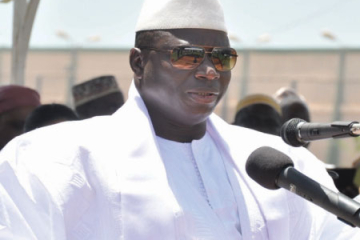
The Managing Director of Gambia National Petroleum Corporation (GNPC) has commended TAKE-M team for recognising their partnership with his institution.
The exercise is geared towards supporting and raising awareness on threats posed by uncontrolled waste pollution in the wetlands and the negative impacts it has on the marine ecosystem and communities along the Gambia river.
Muhammed Hydara, coordinator Gambia Ocean Heroes since their inception in 2018, said GOH with support from partners has collected 339 tons of trash dumped along the coastal communities.
He dwelled on some of their activities, which he said, includes community and school outreaches as well as coastal surveys to advocate for climate resilience and promote partnership with coastal communities.
He thus called on volunteers to take part in this exercise, saying marine debris from coastal communities has now reached an alarming stage.
“To reduce the risks of this problem, everyone should work together to come up with an alternative or sustainable mechanisms to mitigate the waste crisis, and work towards protecting the aquatic environments in The Gambia.” he emphasized.
The Managing Director of Gambia National Petroleum Corporation (GNPC) has commended TAKE-M team for recognising their partnership with his institution.
The Ministry of Higher Education, Research, Science and Technology (MoHERST) in collaboration with International Trade Centre (ITC) on Thursday launched the National Technical and Vocational Education and Training at a ceremony held at the Ministry’s conference hall in Bijilo.
4Everywhere charity organisation on Saturday donated hospital materials to Latrikunda Yeringanyar Ward Development Committee at a presentation held at the community’s health center.
Universidad Nova de Lisboa in partnership with Nova School of Business and Economies (Nova SBE) NOVAFRICA and the Research Institute for Development (IRD) recently organised a day’s dissemination exercise dubbed ‘information gaps and irregular migration to Europe.’