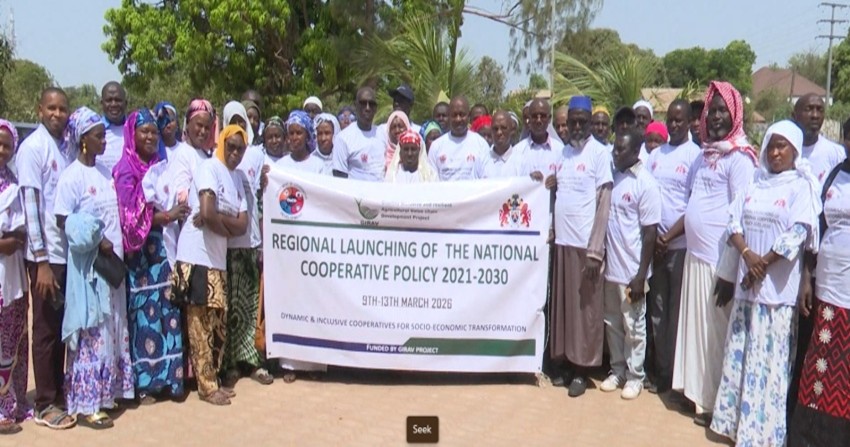
The policy is designed to harness the potential of cooperatives to drive sustainable economic growth while tackling pressing challenges such as food insecurity, malnutrition, and migration.
Presiding over the launch ceremony, Deputy Governor of the West Coast Region, Musa Amul Nyassi, emphasised the importance of the initiative in transforming cooperatives into self-sustaining, member-driven institutions. He explained that the process of developing the country’s first comprehensive cooperative policy began in 2019, with a roadmap drafted through consultations with grassroots cooperative societies, policymakers, and development partners.
Registrar of Cooperatives, Aba G. Sankareh, described the launch as a strategic step towards modernising the cooperative movement. He noted that the policy seeks to align stakeholders around a shared vision while introducing reforms to strengthen the sector. “The flagship objective of the policy is to harness the potential of cooperatives to contribute to sustainable growth in the Gambian economy and reduce food insecurity, malnutrition, and migration flows, thereby advancing the Sustainable Development Goals,” he said.
Agribusiness Specialist with the GIRAV Project, Momodou Salieu Sowe, highlighted that one of the project’s technical components focuses on improving the business environment for commercial agriculture. He explained that the initiative aims to create an enabling environment to attract private investment and build a competitive, sustainable agribusiness sector in The Gambia.
Principal Agriculture Officer, Ensa M. Mendy, added that the policy will promote good governance while enhancing production, value addition, and marketing capacities within cooperatives.
Other speakers, including Aminata Ndongo, Acting Administrative Director at BAC, and Technical Committee member Burang Danjo, stressed that the policy will provide a conducive environment for cooperatives to expand and diversify their activities.
Officials agreed that the policy represents a turning point in addressing past challenges cooperatives face, laying the foundation for a more sustainable and productive cooperative sector in the country.