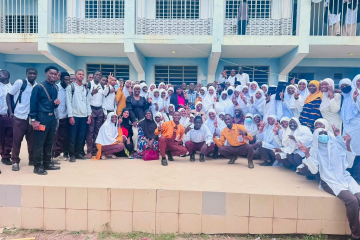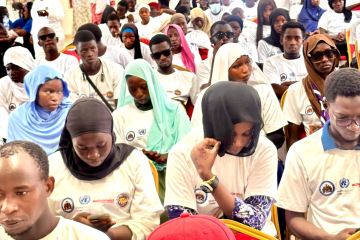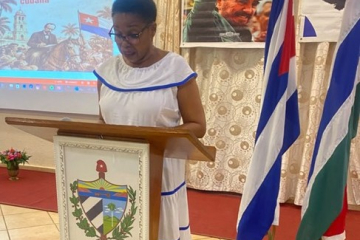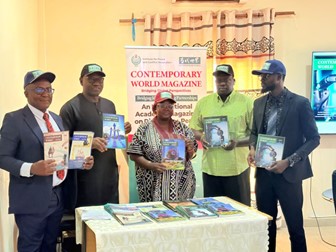
The seminar, held at the University of The Gambia Kanifing Campus, brought together academics, journalists and professionals to discuss the evolving relationship between Africa and China beyond trade and infrastructure development.
Discussions explored themes including peace and security, climate change, food security, governance, sustainable development and cultural exchange. The Contemporary World magazine, which publishes quarterly contributions from scholars, diplomats and policymakers across Africa and China, served as a key platform for the initiative.
IPCR representative Joseph Ochogwu explained that the programme was established to bridge what he described as a “knowledge gap” between Africa and China through objective scholarship and dialogue.
“We felt there was a need to promote informed understanding and functional engagement between African countries and China through research, publishing and scholarly exchange,” he said.
Ochogwu noted that the seminar series began in 2025 in Nigeria, with sessions held in Abuja and Lagos before expanding to Ghana and The Gambia. Tanzania is expected to host the next edition later this year.
Delivering the keynote address, Melchizedek Onobe emphasised that Africa–China relations have become one of the most influential global partnerships of the 21st century, requiring deeper intellectual and cultural cooperation alongside diplomatic and economic ties.
He observed that the relationship is often narrowly viewed through loan agreements, trade balances and infrastructure projects, while overlooking the importance of ideas sharing, knowledge production and cultural understanding.
“The hard power of concrete and steel is sustained by the soft power of ideas,” Onobe remarked.
Tracing the historical roots of the partnership to the Bandung Conference, Onobe highlighted how African and Asian nations united to promote solidarity, sovereignty and South–South cooperation during the Cold War era. He stressed the importance of academia and the media in shaping informed narratives about Africa–China cooperation, urging African scholars to develop independent intellectual frameworks and research methodologies.
“Africa must move beyond being passive observers and become active architects of global ideas and scholarship,” he said.
Journalists attending the seminar were encouraged to play a greater role in promoting balanced reporting and informed public discourse on Africa–China relations.