The Department of Community Development (DCD) has confirmed that beneficiaries of the Productive Economic Inclusion (PEI) project will begin receiving 75 percent of their cash grants in June 2026, marking a significant milestone in the government’s drive to tackle poverty and build economic resilience.
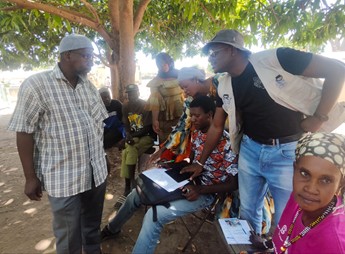
Speaking in an interview with reporters at a registration centre in Pacharr village, Central River Region South, the Deputy Director of DCD, Gibbi Bah, described the initiative as a critical step toward helping vulnerable families move beyond survival.
“This is not just about giving money,” he said. “It is about empowering people to stand on their own and build sustainable livelihoods.”
The PEI project, which has just concluded its nationwide registration exercise, targets 10,000 households, equally split between beneficiaries of the Nafa Cash Transfer programme and non-beneficiaries, ensuring a broader reach among the country’s poorest communities.
Each selected household is expected to receive a D20,000 cash grant, alongside structured support including training, mentoring and continuous coaching designed to strengthen small businesses and entrepreneurial skills.
The initiative is implemented under the Gambia Resilience Inclusion Skills and Equity(RISE) project, a five-year government programme funded by the World Bank, aimed at improving the lives of the most vulnerable through social protection and economic inclusion.
According to Mr. Bah, the PEI model builds on the success of the Nafa programme by introducing what he described as a “graduation approach,” ensuring that beneficiaries do not relapse into poverty after initial support ends.
“We are blending Nafa beneficiaries with 50 percent non-Nafa beneficiaries so that more vulnerable households can build resilience and improve their economic status,” he explained.
Beyond immediate financial support, the programme is designed to create long-term impact. Beneficiaries will be organised into community-based savings groups known as “Place Saving Associations,” where members contribute regularly from their business profits.
These pooled resources, Mr. Bah noted, will enable participants to reinvest in their businesses, expand operations and sustain income growth beyond the project cycle.
“Each participant will be enrolled for 18 months, with coaches visiting them weekly to guide and support their progress,” he added.
At the community level, interest in the programme has been significant.
Dawda Sowe, a Community Development Assistant in Chamen Nianija, revealed that 360 beneficiaries have been identified from Njaw and Panchang Ward in Upper Saloum District alone.
He emphasised that the selection process was conducted transparently, giving households equal opportunity to apply while prioritising the most vulnerable.
“This project is about fairness and impact,” he said. “Those who need it most are being given the chance to improve their lives.”
The PEI intervention comes at a time when many households continue to face economic hardship, with rising living costs and limited income opportunities placing additional strain on already vulnerable communities.