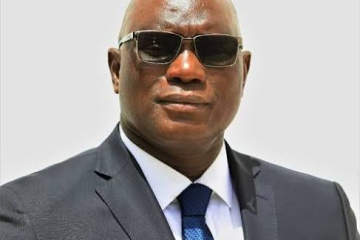
He said the cost of living has become unbearable for many Gambians, with food prices, rent, fuel and electricity continuing to rise. According to him, when people cannot afford basic commodities, it signals a deeper failure in governance and priorities.
“The average Gambian finds it very hard to live in dignity,” he said, noting that despite the country’s vast potential in tourism, agriculture and fisheries, the benefits are not reaching ordinary citizens.
Beyond economic hardship, the UMC leader raised serious alarm over what he described as a worsening security crisis affecting both urban and rural communities. He said the situation can no longer be ignored, citing the brutal killing of 21-year-old Isatou Fatty at her workplace as a painful example.
He described Isatou as a respectful, ambitious and pious young woman who was simply trying to earn an income to support her family after losing her father at a young age. Her death, he said, underscores the dangers facing citizens who are merely trying to survive.
“We strongly condemn this violence and demand justice. If people are not safe, nothing else - development, investment or social progress can move forward.”
Linking insecurity to economic desperation, the UMC leader said hardship and unemployment are eroding hope, particularly among the youth. He cited figures from the Gambia Bureau of Statistics indicating that national unemployment stands at 8.3 percent, with youth unemployment at 11.5 percent, alongside widespread underemployment.
According to him, this despair is driving young people to risk their lives on the ‘backway’. He referenced recent reports suggesting that 190 lives were lost at sea, describing the victims as brothers and sisters who saw no future at home.
He also mentioned Gambians stranded in Morocco, living in inhumane conditions, and expressed hope that the government would intervene to ensure their safe return. He extended condolences to families who have lost loved ones, stressing that no young person should be so desperate to risk death at sea.
The UMC leader argued that the suffering faced by Gambians is not inevitable but the result of neglect and lack of vision. He said every Gambian deserves safety, opportunity and dignity, and that the welfare of the people must be the first priority of any government.
He also touched on the country’s growing public debt, which he said has reached D129.5 billion, further worsening the cost-of-living crisis and limiting the state’s ability to respond effectively to citizens’ needs.
Calling for urgent and concrete action, he said talking alone will not resolve the twin crises of insecurity and hardship. He called for unity, national dialogue especially with the youth and realistic plans to rebuild the economy and restore safety in communities.
The UMC leader said the United Movement for Change was created to pursue a new political direction that puts people first. He disclosed that the party’s registration process with the Independent Electoral Commission is ongoing and that concrete plans will be unveiled in the coming months.
As 2026 begins, he urged Gambians to choose unity over division and action over empty promises, warning that the country stands at a critical crossroads.
“Change is not just possible, it is essential,” he said, calling on citizens to take charge of their future and build a Gambia where people can live safely and afford a dignified life.