Mustapha, who has been teaching for six years, said his motivation came after realising that many students often consider agriculture as a last option rather than a profession with real opportunities.
“As a teacher I noticed that many young people see agriculture as something they only turn to when other opportunities fail. I decided to take responsibility to help change that perception by integrating entrepreneurship into agriculture,” he said.
Through an awareness campaign known as Agri4Youth, Mustapha and his team conduct outreach activities in schools, highlighting the prospects available in agriculture and encouraging students to consider agribusiness as a viable career path.
Since the initiative began in early 2023, it has reached ten schools across three regions and engaged about 500 students. Mustapha said the outreach programme has already begun producing results.
“Some of the students who attended our awareness sessions later approached us for guidance on how they could pursue agriculture further. Ten of them have since enrolled at the Balingo Holistic Agribusiness Centre in the North Bank Region to acquire practical agribusiness skills,” he explained.
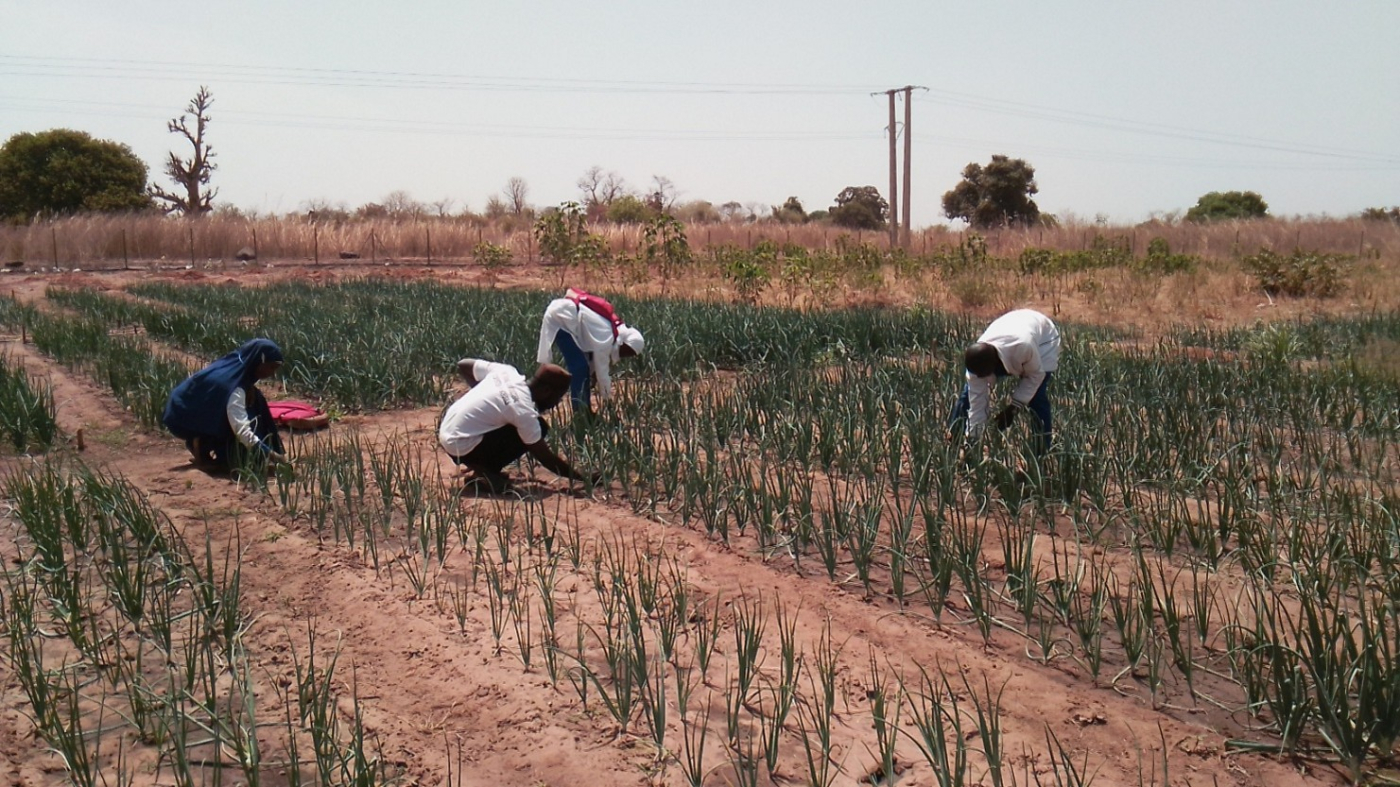
The initiative also focuses on strengthening school gardens to make them productive and financially sustainable. At Jappineh Upper and Senior Secondary School, where the project is currently piloted, the garden has already begun generating income from its produce.
Mustapha noted that the proceeds from the garden are reinvested into the project, allowing it to continue operating without relying entirely on the School Improvement Grant.
The principal of Jappineh Senior Secondary School Ebrima Njie, said the project has become an important learning platform for students studying agriculture.
“Gardening complements what students learn in the classroom. The practical experience helps them understand their lessons better, and even the small income generated from the garden supports other school needs,” he said.
He also highlighted the innovative aspect of the project, noting that students have learned to prepare local pest control mixtures using available materials instead of relying on expensive imported chemicals.
Meanwhile, Bakary Fatty, principal of Jappineh Upper Basic School, described the initiative as an important step in encouraging students to appreciate agriculture.
“At first students had to be encouraged to participate, but now many of them willingly come to the garden because they see its value,” he said.
Fatty further encouraged other schools and communities to learn from the initiative, noting that agriculture remains a key sector for the country’s development.
Despite the progress made, Mustapha acknowledged that funding remains one of the major challenges in expanding the programme to more schools across the country. However, he expressed optimism that with continued support from stakeholders and the commitment of students and school authorities, school gardens can play a significant role in promoting youth agripreneurship in The Gambia.