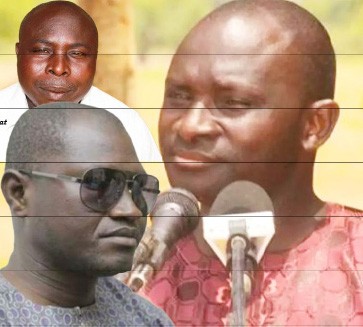
He maintained that it was only known to him two days later, precisely on the 16th April, after the suspects were taken from PIU custody in Kanifing by agents of the NIA under orders of Yankuba Badjie, then NIA Director General.
“I sympathized with what Fatou Camara, Fatoumatta Jawara, Nogoi Njie, and other had gone through. I understand what they have gone through, and to undergo torture was unacceptable,” Sonko told the court while responding to questions from the judges. “I sympathize from the bottom of my heart,” he added.
Explaining further, the April 14 2016 incident had sparked series of subsequent civil movements, analysts believed, that led to the subsequent fall of the government of Yahya Jammeh in 2016, the former Interior Minister said despite the Police move to round up the protesters, no beatings or torture had been meted on the suspects until the NIA demanded their transfer from the PIU.
“I didn’t know of Sandeng’s death because Yankuba Badjie refused to disclose the information,” Sonko said as the judges pressed for answers on how, as arresting authority, suspects were handed over to another security authority without his participation or knowledge.
Part of Sonko’s grounds for conviction in 2024 was command responsibility. According to the Swiss Court of first instance (trial chambers), he was found guilty of torture, deprivation of liberty and death in custody of April 14 suspects. He has since denied any responsibility despite the prosecution and private plaintiffs’ presentation of series of evidence and witnesses tie him to that infamous incident that occurred ten years ago.
“Where you concerned about the welfare of other inmates after learning of the death of Solo Sandeng? President of the appeals chamber asked him, as Sonko narrated the protocol for questioning suspects, taking statements and charging them before presenting them to courts. In this case, those protocols were not followed to the letter when the PIU allowed the NIA to transfer suspects to Mile 2 and the NIA headquarters. To the prosecution, Sonko knew very well what would befall the suspects once the NIA got involved.
Sonko insisted that despite his position as minister for internal security, he had no powers over the NIA and the Junglers, who operated outside the command and effective authority of the usual command structures. “Mr President, those men report only to the president. Even in cabinet, their matters were never discussed,” he replied, maintaining that before the March 2006 coup attempt, very little public information was available to the public about the Junglers.
His lawyer Phillippe Currat, in leading the examination of his client, asked the relationship between IGP and the Minister for Interior in maintaining internal security and responding to activities that threaten those two. Sonko said he is usually consulted at administrative levels and receives briefings when necessary, but he was not involved in operational matters of the Police. That’s a role exclusively under the IGP.
“What happened on April 14 was regrettable, Mr President,” he said. “We had learned serious lessons which was why when April 16 protests came, we took strict response guidelines to avoid a repeat of what happened on April 14,” he said, describing one as civilian protests despite a lack of permit, which under the Public Order Act, was illegal, while another was political as opposition leader, Ousainou Darboe was spearheading.
“Abdoulie Sanneh had informed me that he had received instructions from the NIA to identify five suspects as ring leaders. Instead, he provided only three, including Solo Sandeng,” Sonko told the court, naming Sandeng, Nogoi and Modou Ngum as those three. He also said that Kafu Bayo and Ebrima Jabang had been further identified by an NIA agent present at the PIU.
He said a high court file on this matter that led to the conviction of the said NIA officials responsible for the incident had been requested by the Swiss court as evidence in his own case. “…it was Yankuba Badjie who instructed the Commissioner of Operations, Sheikh Omar Jeng, to provide transportation for the transfer of five suspects to the NIA. Baba Danso escorted the suspects,” he said.
The former Jammeh strong man said these were lessons learned, hence he had taken measures to develop a guideline for police response to such disturbances in the future, before he was removed by Jammeh subsequently.