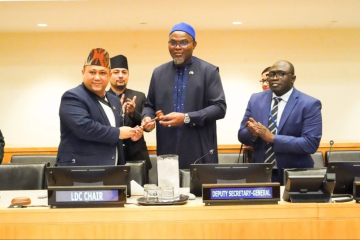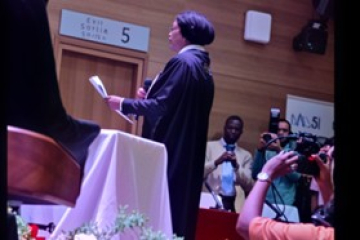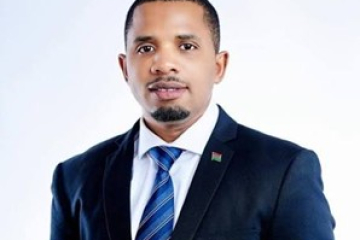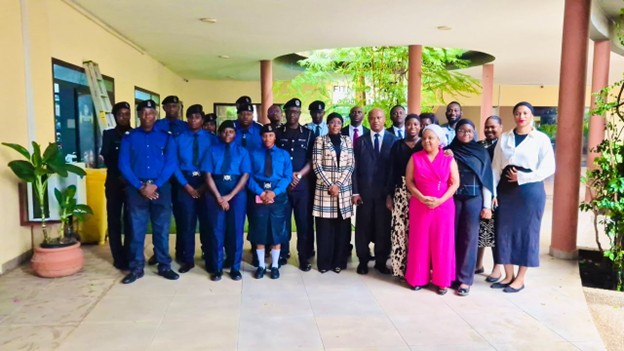
Speaking at a forum organised by the Gambia Press Union (GPU) on the safety of journalists, Thomasi described the gathering as “a great honour and privilege,” stressing that freedom of expression is a fundamental human right and a cornerstone of democratic governance.
He commended the GPU and its partners for convening the timely programme, which brought together media professionals and members of the criminal justice system. “Journalists play an indispensable role in gathering and disseminating information, scrutinising public power, investigating wrongdoing, and enabling citizens to make informed decisions,” Thomasi said. “Protecting journalists is therefore a means of protecting the public’s right to know and strengthening democratic accountability.”
Reflecting on the country’s past, Thomasi recalled the findings of the Truth, Reconciliation and Reparations Commission (TRRC), which documented the persecution of journalists under the former regime. He noted that while progress has been made, challenges remain, including physical attacks, threats, online harassment, and intimidation.
Of particular concern, he said, is the culture of impunity surrounding attacks on journalists. “An attack against one journalist can have consequences far beyond the individual victim, creating fear among other media professionals and producing a chilling effect,” he warned. Thomasi emphasised that credible allegations must be properly investigated and, where evidence warrants, prosecuted before competent courts.
He highlighted the role of prosecutors in deterring future attacks and reinforcing the principle that no one is above the law. “Appropriate action should follow irrespective of the status, affiliation, or influence of the alleged perpetrator,” he stated.
Thomasi also cautioned that journalists, like all citizens, are subject to the law, and that responsible journalism requires professionalism and accuracy. However, he stressed that disagreement with reporting or dissatisfaction with publications can never justify violence, intimidation, or unlawful retaliation.
With the 2026–27 electoral cycle approaching, Thomasi urged law enforcement and prosecutorial institutions to remain vigilant. “Elections are periods of heightened political activity, during which journalists are expected to report freely and fairly. Their exposure to risk may consequently increase,” he said.
The Solicitor General concluded by reaffirming the Ministry of Justice’s commitment to the rule of law and effective administration of justice. “If we succeed in protecting journalists, we will be protecting the public’s right to know, reinforcing confidence in our institutions, and contributing to the consolidation of democracy,” he declared.
Isatou Keita, President of the Gambia Press Union (GPU), emphasised the union’s recognition of the vital role played by the police prosecutor in safeguarding journalists, defending freedom of expression, and combating impunity for crimes committed against media professionals in The Gambia.
She noted that the collaboration between the GPU and law enforcement is a crucial step toward ensuring accountability and strengthening democratic values. By acknowledging the prosecutor’s contribution, the GPU underscores the importance of justice in protecting press freedom and creating a safer environment for journalists to carry out their work without fear or intimidation.
Abdoulie Sanneh, head of the Prosecution Department and Legal Adviser, has assured the Gambia Press Union and the wider media fraternity that the Gambia Police Force remains committed to constructive engagement.
“We will continue to strengthen the professionalism of our personnel and address conduct that falls outside the law or professional standards,” Sanneh stated.
This pledge underscores the importance of collaboration between law enforcement and the media in promoting accountability, transparency, and respect for press freedom. The assurance comes at a time when dialogue between institutions and journalists is vital for strengthening democracy and public trust.