Victim’s Statement
In her police statement, Fatoumatta recounted how the accused, Batch Samba Jallow, first raped her in November 2018 inside her parents’ home. She described bleeding after the assaults and said Jallow would give her D50 after each encounter.
“I last had carnal knowledge with him on 25 March 2019 at around 8 a.m.,” she told police.
She was later taken to Sukuta Health Centre, where doctors confirmed her pregnancy.
Mother’s Statement
Fatoumatta’s mother told police she discovered the pregnancy on 28 March 2019. When confronted, her daughter initially denied it but later confessed, naming Jallow as the perpetrator.
The mother said she knew Jallow through her son, who lived in the same compound. She reported the matter to police the following day.
Medical Report
On 1 April 2019, a medical officer at Sukuta Health Centre confirmed Fatoumatta was six months pregnant.
Accused’s Statement
On 2 April 2019, Jallow, then 21 and working as a mechanic, was arrested and charged. In his voluntary statement, he admitted having sexual intercourse with Fatoumatta but claimed it was consensual.
“I had carnal knowledge of Fatoumatta, but it was with her consent, without force,” he told police.
In his cautionary statement, Jallow said he often visited the victim’s home to collect rubbish or eat leftover food. He admitted to intercourse in February 2019, claiming he stopped before ejaculation and gave her D100 “to compensate.”
Legal Proceedings
On 15 May 2019, the State Law Office filed an indictment against Jallow, charging him with rape contrary to Section 3(1)(a) of the Sexual Offences Act, 2013.
The prosecution alleged that Jallow, sometime in 2018 at Bakoteh in the Kanifing Municipality, had unlawful carnal knowledge of a 12-year-old girl.
Despite the charges, the case was later struck out, leaving the victim without justice.
Batch Samba Jallow was formally arraigned at the Brikama High Court before Hon. Justice Musale on 4 July 2019, where he pleaded not guilty to a charge of rape. Justice Musale ordered that he be remanded at Mile 2 Central Prison.
However, on 23 July 2019, Justice Musale admitted him to bail in the sum of D10,000 with one surety, Babajo Jallow.
Surety’s Affidavit
On 1 August 2019, Babajo Jallow submitted a sworn affidavit of means to the Brikama High Court, declaring himself a Gambian national residing in Essau, North Bank Region. He provided an ID card number—later discovered to be from the old, non-biometric system.
“I am a businessman. The accused person, Batch Samba Jallow, is my brother’s son. I am willing to stand as surety for him and have the means to forfeit the bail sum if he absconds,” Babajo Jallow swore.
He further pledged to ensure the accused’s regular attendance in court.
Release Order
In a letter dated 1 August 2019, Acting Registrar Kebba S. Touray confirmed to the Director of Mile 2 Central Prison that Jallow had fulfilled his bail conditions.
“The above name in your custody was released on bail on 23 July 2019 by the High Court Brikama. The accused is standing trial for rape. Having fulfilled the conditions for bail, he shall now be released as ordered,” the letter stated.
Following this, Jallow was released from Mile 2 Central Prison. He initially appeared regularly in court, though the matter did not progress substantially.
Transfer to Banjul High Court
The case was later transferred to the Banjul High Court and assigned to Hon. Justice Achibonga. However, from 4 November 2020, Jallow ceased to appear in court.
Justice Achibonga subsequently issued summonses to the surety, Babajo Jallow, to show cause why the bail bond should not be forfeited. But Babajo Jallow could not be traced, and the summonses were never executed.
State’s Efforts
After Justice Achibonga’s departure from The Gambia, Chief Justice Hassan B. Jallow reassigned the case to Hon. Justice Ebrima Jaiteh of the Special Criminal Division on 12 March 2024. Since then, neither the accused nor his surety has appeared before the court.
On 18 March 2024, Justice Jaiteh granted the State’s application for the surety to face the court. The ex parte motion, filed on 10 July 2023, was supported by a 10-paragraph affidavit sworn by Yassin Senghore, a legal clerk at the Attorney General’s Chambers.
“I have perused the averments in the supporting affidavit and I am satisfied that the application has merit,” Justice Jaiteh ruled.
He ordered that Babajo Jallow appear in court to show cause why the recognisance should not be forfeited and directed that he be served with the motion ex parte.
Meanwhile, Hon. Justice Ebrima Jaiteh adjourned the case to 6 May 2024 for the surety, Babajo Jallow, to show cause. However, despite the court order, Babajo Jallow failed to appear on the adjourned date.
On 31 May 2024, the State filed another ex parte motion seeking substituted service of the order made on 18 March 2024 at the surety’s last known address. The motion was supported by a 13 paragraph affidavit sworn by Yassin Senghore, a legal clerk at the Attorney General’s Chambers.
On 3 June 2024, Justice Jaiteh granted the application and ordered substituted service of the March ruling at Babajo Jallow’s last known place of residence.
Despite repeated attempts, both the accused, Batch Samba Jallow, and his surety remained untraceable.
Case Struck Out
On 15 December 2025, Prosecuting Counsel F. Drammeh formally applied for the matter to be struck out, submitting that the accused, who was on bail, could not be located, and the surety was equally untraceable, making further proceedings impossible.
“My lord, we are applying for the case to be struck out. The accused person has absconded. We don’t know his current location. And the surety is nowhere to be found,” Counsel Drammeh told the court.
Justice Jaiteh asked whether the accused and surety might have left the country “through the back way,” noting the State had struggled with the case since 2019.
Granting the application, Justice Jaiteh ruled:
“The Court has carefully considered the application and the entire history of this matter. It is clear that the accused has absconded from the jurisdiction of the Court, and the mechanisms available to compel his attendance, including recourse to the surety, have been exhausted without success. In these circumstances, there is no justification in law or in practice to keep the matter on the cause list indefinitely when the accused person cannot be brought before the Court. Accordingly, and in the absence of the accused and his surety, this matter is hereby struck out.”
Legal Perspective: What Next?
Speaking to this medium, a former state prosecutor—who preferred anonymity—explained that while a dismissed case cannot be re litigated, a case that is struck out can be re filed. “Therefore, this particular case can be brought back for litigation by the State Law Office,” he said.
On the issue of bail, the former prosecutor criticised the leniency of the conditions granted to Jallow. He noted that the indictment stated the victim was 12 years old at the time of the offence.
“This means that if convicted, the accused would face life imprisonment. Section 4(1)(a)(i)(bb) of the Sexual Offences Act provides for life imprisonment for rape against a child under 13. Under Section 99 of the Criminal Procedure Code, bail is not permitted for offences carrying life or death sentences,” he explained.
He argued that the judge failed to take this into account when granting bail and that the State should have appealed the decision, as it contradicted both the Sexual Offences Act 2013 and the Criminal Procedure Code.
“In my view, bail should only have been granted under exceptional circumstances, such as ill health. The State was hesitant in applying for the case to be struck out. Before doing so, it should have established the whereabouts of the accused to confirm whether he had indeed jumped bail and left the jurisdiction,” he added.
He explained that while Section 25(3)(f) of the Constitution prohibits trial in absentia, it provides an exception: an accused may be tried in absentia if “he or she so conducts himself or herself to render the continuance of the proceedings in his or her presence impractical and the court has ordered him or her to be removed and the trial to proceed in his or her absence.”
“Thus, an accused person who jumps bail and absconds can be tried in absentia because he has conducted himself in a manner that renders his presence impractical. In that case, the State should simply apply for the matter to proceed without him,” he said.
Failures in the Justice System
The veteran litigator criticised his former office, stating that the case exposes weaknesses in The Gambia’s criminal justice system, highlighting failures of both the courts and the Ministry of Justice.
He noted that no progress was made in the prosecution between July 2019 and November 2020, largely due to the unavailability of judges. The file was transferred from Brikama to Banjul after both Justices Musale and Achibonga—judges from Nigeria and Ghana respectively—completed their assignments and returned home.
“Secondly, there appears to be little effort by the State to pursue the file and have it reassigned to other available judges in Banjul. The file seems to have been abandoned by State prosecutors. The State also does not seem to care about the whereabouts of the accused and his sureties,” he said.
He added: “These are basic matters the State ought to have under control, as well as maintaining communication with the victim’s family. I cannot imagine the frustration of the victim and her family, who have been denied the justice they deserve.”
The former prosecutor advised the victim’s family to approach the National Human Rights Commission (NHRC), stressing that their right to justice has failed. He cautioned that even if the State re files the case should the accused resurface, there is no guarantee the authorities will follow up effectively.
Child Protection Alliance Demands Justice
The Child Protection Alliance (CPA), a leading child rights coalition established in 2001, expressed deep concern and outrage over the striking out of the case.
“CPA notes that this case was supported by strong evidence, including the survivor’s statement, medical confirmation of pregnancy, corroborating testimony from the child’s mother, and the accused’s own admission of sexual intercourse with a minor. Despite this, the survivor has been denied justice due to prolonged delays, weak bail enforcement, and the failure to secure the presence of the accused before the court,” CPA said.
CPA stressed that the outcome represents a serious failure of the justice and child protection systems. While the court’s decision may be procedurally lawful, CPA argued it is substantively unjust and harmful to the survivor and public confidence in the rule of law.
“When a child rape case collapses not because of a lack of evidence but because of systemic weaknesses, the message sent is one of impunity,” CPA warned.
CPA’s Concerns and Recommendations
CPA highlighted several systemic failures:, including: The granting and poor monitoring of bail in a serious sexual offence involving a child; Inadequate verification and enforcement of surety obligations; Excessive delays in prosecuting sexual violence cases, and Lack of effective mechanisms to track and apprehend accused persons who abscond.
“Child survivors of sexual violence deserve timely, survivor centred, and effective justice, not prolonged processes that end without accountability. Justice delayed and ultimately denied compounds trauma and undermines national commitments to protect children from sexual abuse and exploitation,” CPA said.
“CPA stands in solidarity with the survivor and all children who have suffered sexual violence. We reaffirm our commitment to advocating for a justice system that protects children, holds perpetrators accountable, and ensures that no child is left without remedy due to institutional failure. Justice for children must not be optional—it must be guaranteed,” CPA concluded.
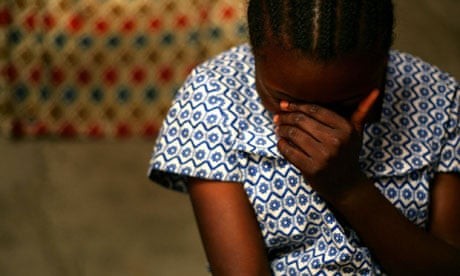
Picture credit, the Guardian