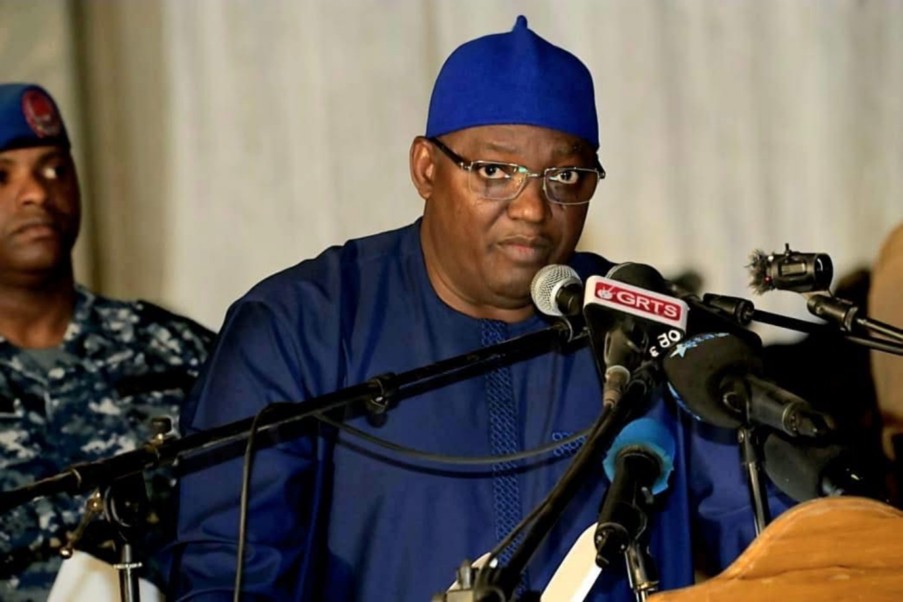
Barrow revealed that the nationwide electrification drive has boosted national electricity coverage from 73 percent to about 90 percent, placing The Gambia firmly on track to achieve universal access by the end of 2026—four years ahead of the global 2030 target.
Of the 719 newly electrified communities, 209 are in the North Bank Region and 157 in the Central River Region. The President hailed this as an unprecedented achievement in the country’s infrastructure development.
“As we inaugurate these projects, we are not merely switching on electricity,” Barrow declared. “We are unlocking opportunity, restoring dignity, and improving the daily lives of our people.”
For decades, rural households lived without reliable electricity, limiting economic growth and deepening inequality between urban and rural areas. Women endured long hours of manual labour, students studied by candlelight, and small businesses struggled to expand.
Barrow said the new connections mark a turning point. Electricity, he emphasised, is more than infrastructure—it is a catalyst for socio-economic transformation. It powers schools and health facilities, supports agro-processing and food preservation, strengthens small and medium enterprises, stimulates industrialisation, and creates jobs for youths and women.
“This is about ensuring that electricity is not a privilege for the few, but a basic service accessible to every Gambian community,” he said.
Placing the achievement within Africa’s broader energy challenge, Barrow noted that over 650 million people on the continent still lack electricity. He said The Gambia is actively contributing to the Mission 300 Agenda, which aims to provide electricity to 300 million Africans by 2030.
“The Gambia is proud to be associated with this initiative not as a passive participant, but as a country determined to lead by example,” he stated.
With current progress, The Gambia is poised to become one of the first ECOWAS countries to achieve universal electricity access.
Barrow assured the remaining 10 percent of communities yet to be connected that government has mobilised the necessary resources to complete nationwide electrification by 2026.
He disclosed that D400 million has been secured in the 2026 national budget to finance the final phase, while additional funding is being mobilised under the National Energy Compact initiative in partnership with the World Bank, African Development Bank (AfDB), European Union (EU), European Investment Bank (EIB) and ECOWAS. Overall, energy sector investment commitments now stand at approximately US$552 million.
Commending development partners, ministries, NAWEC, consultants and contractors for delivering works across all 719 project sites, Barrow urged communities to make full use of the electricity supply to educate children, grow businesses, reduce hardship and strengthen livelihoods.
“We are lighting homes and building a more prosperous and resilient Gambia,” he said. “No Gambian will be left behind.”
With electrification now reaching 90 percent coverage, the country stands on the threshold of a historic milestone—one that could see The Gambia achieve universal electricity access ahead of many of its regional peers.