She expressed President Bola Tinubu's concern about the attacks in the southern African nation, and condemned the violence against foreign nationals and demonstrations characterised by "xenophobic rhetoric, hate speeches and incendiary anti-migrant statements".
Nigeria has summoned South Africa's acting High Commissioner over the issue.
Nigeria will formally convey its "profound concern" at a meeting later on Monday over the incidents in South Africa, saying they could affect existing relations between the countries, according to a foreign ministry statement.
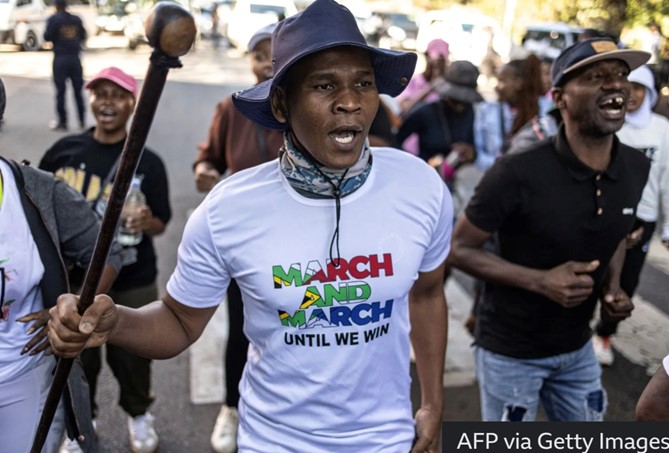
The meeting will focus on recent marches held by anti-immigrant groups and "documented instances of mistreatment of Nigerian citizens and attacks on their businesses", it said.
On Sunday, Nigeria's foreign minister said: "Nigerian lives and businesses in South Africa must not continue to be put at risk, and we remain committed to working to explore with South Africa ways to put an end to this."
She cited the killing of two Nigerians in separate incidents involving local security personnel, insisting that her government was demanding justice.
She said the Nigerian president's priority was for the safety of citizens and "consequently, arrangements are currently under way to collate details of Nigerians in South Africa for voluntary repatriation flights for those seeking assistance to return home".
Four Ethiopian nationals have also been killed in recent weeks, local media reported, while there have been attacks on citizens of other African countries.
Peter Odike, a Nigerian naturalised in 2006, told the BBC there was fear among immigrants in South Africa: ''Business is totally down. Most of us are shutting down because it's not safe to stay here,'' he said.
As Africa's most industrialised country, people from elsewhere in the continent have long travelled to South Africa to seek work.
South African President Cyril Ramaphosa has condemned the attacks but also cautioned foreigners to respect local laws.
He used his Freedom Day address last week - marking the country's first democratic elections in 1994 - to remind South Africans of the support other African nations had given in the struggle against the racist system of apartheid.
But some South Africans accuse foreigners of being in the county illegally, taking jobs from locals and having links to crime, especially drugs trafficking.
Anti-immigrant groups have been stopping people outside hospitals and schools demanding to see their identity papers. (Source: BBC)