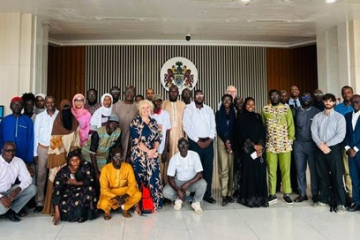
At an emergency meeting convened by the GPU on April 8, 2026, a coalition of 16 media organisations, civil society actors, and representatives from academia reached a unanimous position opposing the proposed regulations.
The stakeholders argued that the State-controlled registration and accreditation regime would hand government unlawful and arbitrary powers to determine who is permitted to practise journalism. They warned that such measures could undermine press freedom, restrict freedom of expression, weaken media independence, and encourage self-censorship, particularly affecting investigative journalism.
They further raised alarm over plans to register social media influencers and users with large followings, cautioning that the move would shrink civic space and limit the right to free expression online.
Following these concerns, the coalition announced a total boycott of the validation workshop on three key regulatory instruments: the Broadcasting and Online Content Regulations, 2026 the Broadcasting and Online Content Licensing, Registration and Authorisation Guidelines, 2026 and the Journalists Registration Guidelines, 2026.
The standoff highlights growing tensions over media regulation in The Gambia, with journalists and civil society groups insisting that any reforms must protect, rather than restrict, fundamental freedoms.