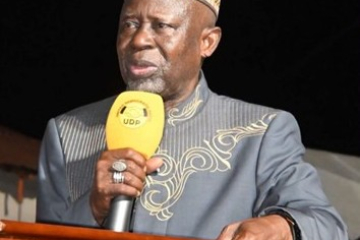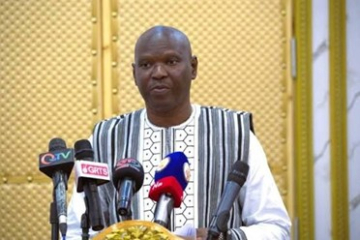
He stated that migrants sustain the Gambian economy while the state fails to sustain its people. According to EFSCRJ, remittances from Gambians in the Diaspora account for more than 30 percent of the country’s Gross Domestic Product. These funds support households, pay school fees, finance healthcare, sustain small businesses, and cushion families against economic shocks. Yet, despite benefiting immensely from this migration-generated income, the state has failed to create comparable opportunities at home that would allow citizens to live with dignity without risking their lives at sea.
The Centre rejects the narrative that only the poor and uneducated leave. It notes that both underprivileged youths and highly educated, skilled, and relatively privileged Gambians are seeking to exit the country through different routes. What unites them, EFSCRJ argues, is not attitude but dire socioeconomic conditions and limited prospects. The real issue, therefore, is not whether migration is regular or irregular, but the conditions that justify and fuel it.
EFSCRJ insists that migration is a human right and acknowledges that the backway is unsafe, dangerous, and unacceptable. Yet, it argues that these deadly journeys did not arise in isolation. Rather, they are the outcome of decades of deprivation, limited opportunities, and persistent hardship. When migration becomes a mass preoccupation driven by desperation, the Centre says, it raises unavoidable socioeconomic and governance questions that the nation has failed to confront honestly.
He highlights that even workers in the formal sector including civil servants, security officers, and private-sector employees are abandoning their jobs to embark on the backway, underscoring what it calls the depth of the national crisis. While many youths remain in the country working as carpenters, fisherfolk, taxi drivers, farmers, artisans, and professionals, frustration persists due to low incomes, rising living costs, weak public services, and limited social mobility.
Sixty years after independence, EFSCRJ describes national development as ad hoc, disjointed, and weak, with poorly implemented or non-existent policies and chronically underfunded youth institutions. The Centre points to the Government’s 2025 Labour Survey, which shows that 41 percent of Gambian youth are not in education, employment, or training, as stark evidence of systemic failure.
EFSCRJ calls it inexcusable that illegal migrant boats continue to evade detection despite the presence of the police and navy, demanding effective surveillance, investigations, and prosecution of all perpetrators.